
Earlier this year, I published an article about my fifth great-grandfather on my Dad’s side, King Charles, a Gloucestershire labourer whose rather grand name was entirely at odds with his circumstances. I had traced his life through parish registers, census returns and marriage records, established his marriages and children, and put together what I thought was a reasonably comprehensive account of his life. There were a few gaps, as there invariably are when researching ordinary people in the eighteenth and nineteenth centuries, but I felt I had enough to tell his story.
Since then, I’ve been back to the records, visited Frampton-on-Severn and discovered quite a bit more about King and his family. Some of it has added useful detail to the original account, while other discoveries have made me reconsider information I had previously accepted. There is a prison sentence, an unfortunate accident, some interesting developments concerning his children, and a marriage record that has caused me no end of trouble. I’ve also discovered that there may have been more than one King Charles living in the area, which rather defeats the advantage of having an ancestor with such an unusual name.
This is therefore a return to King’s story, rather than an entirely new investigation. I wanted to bring together the additional evidence, correct some of my earlier conclusions and explain where the research has taken me. There are still questions I haven’t resolved, but that’s rather the nature of family history. The more records you find, the more you realise that the tidy version of events you originally constructed might not have been quite so tidy after all.
Back to Frampton-on-Severn
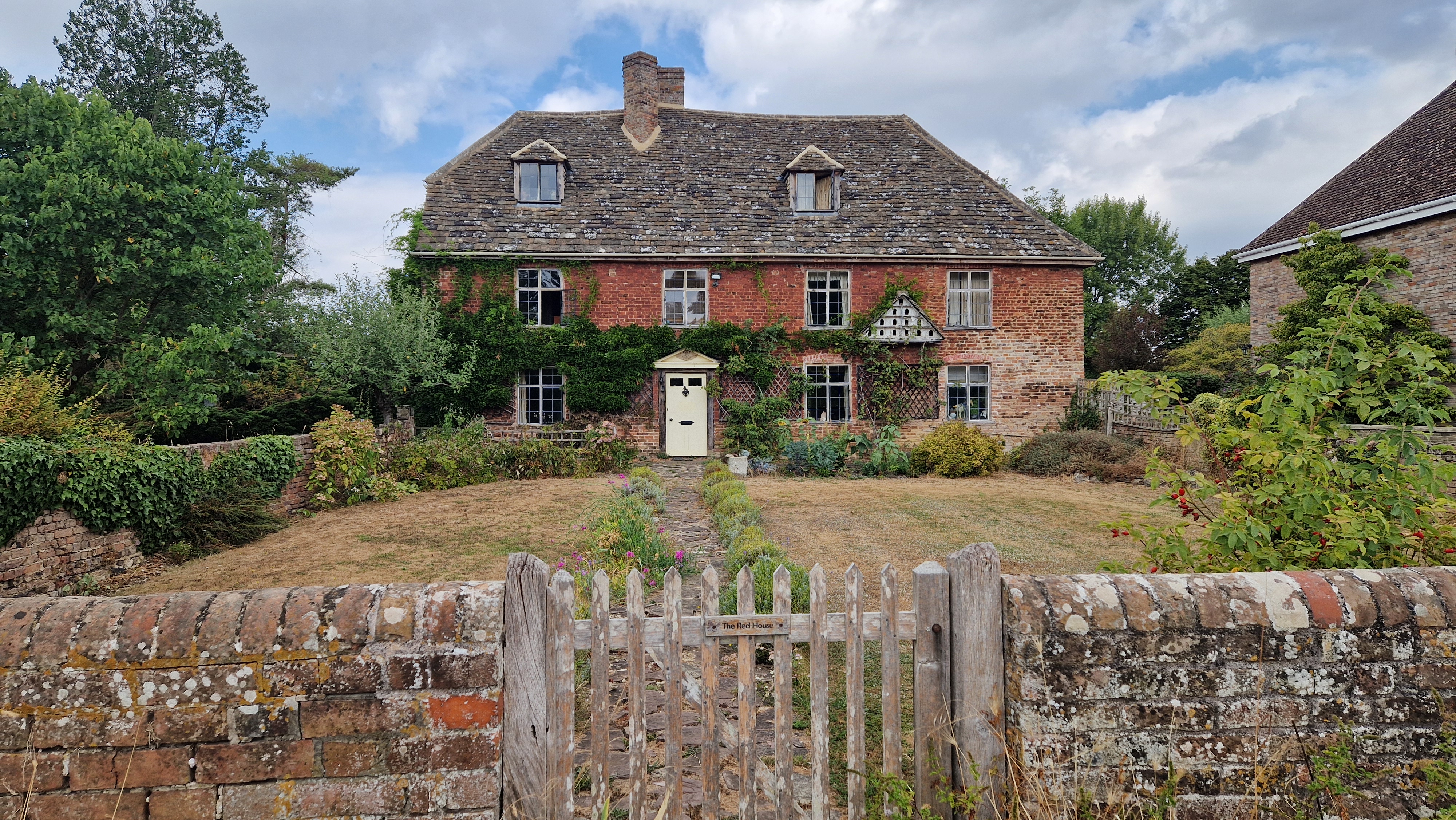
In August, I took the family on a genealogy road trip around Gloucestershire, visiting several places connected with different branches of my family. Frampton-on-Severn was one of the stops I was particularly looking forward to, having spent months encountering the village in parish registers and census returns without ever having visited it. King was baptised at St Mary the Virgin on 28 February 1796, alongside his twin sister Elizabeth. His parents, John Charles and Ann Roper, had previously lived in Herefordshire, where several of their older children were born, before settling in Gloucestershire. King would spend much of his life in and around Frampton, marrying there, raising his family in the surrounding villages and eventually being buried in the churchyard in March 1870.


Naturally, I wanted to find his grave. The burial register records that King was buried at St Mary’s on 24 March 1870, but despite searching the churchyard, I couldn’t find a gravestone that I could confidently identify as his. There was no surviving grave plan available to establish the precise location either. Given his occupation and the financial difficulties I have since uncovered, it’s possible that he never had a permanent memorial, although an existing stone may simply have been lost or become illegible. Either way, I know he’s there somewhere. I just can’t tell you where, which was a slightly disappointing conclusion after spending a considerable amount of time examining nineteenth-century gravestones.
I did, however, find another Charles. Reuben Charles died in 1905, and his gravestone survives in the churchyard. Subsequent research revealed that he was baptised in Frampton in 1818 as the base-born son of Elizabeth Charles, a servant. King’s twin sister was also named Elizabeth and would have been approximately 22 when Reuben was born. She is therefore a possible candidate for his mother, although I haven’t yet established that they were the same woman. Reuben has consequently joined the research list, despite not being the person I went looking for. I suspect anyone who has undertaken a genealogy trip will recognise this particular outcome.

We also explored the area around Muddleshole, where King was living in 1851, and visited some of the other locations associated with the family. Although the landscape has changed considerably, seeing the villages and the distances between them helped me put the records into context. Frampton, Eastington and Whitminster had previously been names appearing on documents, but visiting them gave me a better understanding of the area in which King lived and worked. It also prompted me to revisit some of the records I had used in my original article, which turned out to be rather more productive than I anticipated.
Two marriages and a growing family
King married Hester Grafton at St Mary’s Church on 26 May 1822, following the reading of banns on three consecutive Sundays. Hester had been born in Oswestry, Shropshire, although I haven’t yet established how she came to be living in Gloucestershire. Neither of them signed the marriage register, both making their marks, and the witnesses were Mary Hall and Giles Griffin. I have identified six children from their marriage: Caroline, Elizabeth, Harriet, George, Thomas and Eliza. Thomas, born in 1830, was my fourth great-grandfather and the ancestor through whom I descend from King.
Hester died in 1833 and was buried at Frampton on 1 January 1834. Her burial record doesn’t give a cause of death, and I haven’t found anything further to explain the circumstances. King remarried on 11 October 1835, this time to Ann Davis, who was born around 1814. Their marriage also took place at Frampton, with John and Harriet Browning and Giles Frape acting as witnesses. The children currently associated with this marriage are Emma, William, Sophia, Martha and Edwin, although Martha’s parentage has become one of the more interesting problems in this investigation.
The 1841 census records King and Ann living in Frampton with George, Thomas, Eliza, Emma and William. King was described as a labourer, an occupation that appears consistently throughout the surviving records. Baptisms, census returns and his children’s marriage records repeatedly identify him in this way, and the newspaper reports surrounding his death eventually provided a little more information about the sort of work he was undertaking. He had a substantial family to support, but the census tells us very little about their financial circumstances. Another record, however, provides rather more information about the difficulties they experienced towards the end of the decade.
His Majesty’s pleasure and fourteen days’ hard labour
One of the most significant discoveries since writing my original article has been King’s admission to Horsley House of Correction in December 1849. The prison register provides an unusually detailed physical description, recording him as a 54-year-old labourer from Frampton, standing five feet six and three-quarter inches tall, with what appears to be black hair, hazel eyes, a dark complexion and sunken cheeks. His age is slightly inconsistent with his baptism in February 1796, which would make him 53, but a discrepancy of one year is hardly unusual in nineteenth-century records. The description is particularly interesting because I have no known photograph of King, and it provides rather more information about his appearance than I had previously expected to find.
The reason for his imprisonment was less welcome. King had been convicted as an “idle and disorderly person for wilfully neglecting to maintain his family, despite being considered capable of doing so“. His family had consequently become chargeable to the parish of Frampton-on-Severn. He was sentenced to fourteen days’ hard labour and released on 9 January 1850. The register records no previous convictions and describes his conduct during imprisonment as good.
This discovery changes the picture of King’s life quite considerably. I had previously described him as a labourer supporting a large family, but the prison record establishes that the household had become dependent on parish assistance and that King had been punished for failing to maintain them. What it doesn’t explain is how the family reached that position. The conviction reflects the authorities’ judgement that King was capable of providing support, but it doesn’t tell us what employment was available to him, whether he had been refusing work or whether other circumstances had contributed to the family’s difficulties.
There is, however, another piece of evidence that makes this period particularly interesting. King’s wife Ann died on 20 May 1850, less than five months after his admission to prison. Her death certificate records pulmonary consumption of two months’ duration and marasmus of two years’ duration. Pulmonary consumption was commonly used to describe tuberculosis affecting the lungs, while marasmus referred to severe wasting or emaciation, which could accompany prolonged illness or inadequate nutrition. If the durations recorded on the certificate are approximately correct, Ann had been experiencing significant health difficulties since around 1848, well before King’s imprisonment.

The combination of these records raises some important questions about the family’s circumstances. Ann had been seriously ill for a prolonged period, the household had become dependent on parish assistance, and King had been sentenced to hard labour for failing to maintain them. It is possible that Ann’s illness contributed to the family’s financial difficulties, or that poverty affected her health, but the records don’t establish precisely how these circumstances were connected. They do, however, provide a much fuller picture of a difficult period in the family’s history, and one that was entirely absent from my original article.
A widower at Muddleshole, and the problem of Martha
By the time of the 1851 census, King was living at Muddleshole in Eastington. He was recorded as a widower, with Eliza, Emma, William, Sophia, Martha and Edwin living in the household. I had previously accepted Martha as a daughter of King and Ann, which seemed reasonable given her presence with the family in both the 1851 and 1861 censuses. However, when I returned to her baptism record, I discovered that her parents were recorded as King and Elizabeth Charles.
I checked the original entry, and it definitely says Elizabeth. There is also a discrepancy with Martha’s age. She was recorded as four years old in the 1851 census, suggesting a birth around 1846 or 1847, but the baptism associated with her took place in 1845. Neither discrepancy is necessarily insurmountable. Census ages are not always accurate, and mistakes certainly occurred in parish registers. However, the combination made me question whether I had correctly identified Martha’s baptism or whether there was something else about her parentage that I had overlooked.
Initially, I wondered whether the parish clerk had simply recorded the wrong mother’s name. It would certainly be the most convenient explanation, and there is nothing inherently implausible about a clerical error. Unfortunately, another record has made the situation considerably less straightforward.
How many King Charleses does one village need?
In 1833, marriage banns were read at Frampton-on-Severn for King Charles, a widower, and Elizabeth Merrade. This was an interesting discovery, not least because my King was still married to Hester Grafton, who wasn’t buried until January 1834. Unless Hester had developed a particularly unusual approach to marital separation, something was clearly amiss.
I haven’t found a corresponding marriage entry, so the banns establish that a marriage was intended but not that it actually took place. More importantly, they don’t establish that the groom was my ancestor. There was another King Charles in the wider family, born in 1749, although I haven’t yet determined whether he was alive and widowed in 1833. It is also possible that another man of the same name was living in the area. I had always assumed that King’s unusual name would make him relatively easy to identify, but it appears the Charles family may have had rather less imagination when naming their sons than I originally credited them with.
The banns become particularly interesting when considered alongside Martha’s baptism. Could her mother, Elizabeth Charles, have been Elizabeth Merrade? If so, was her father the King Charles named in the 1833 banns? Alternatively, could my King have fathered Martha with another woman while married to Ann? There are several possible explanations, but I haven’t found sufficient evidence to establish which, if any, is correct. The existence of the banns certainly doesn’t prove that my ancestor attempted to marry another woman while Hester was alive, and I have no intention of accusing him of bigamy on the strength of an unresolved parish entry. Tempting though it might be to add another scandal to the family history.
Martha’s marriage record introduces another complication. When she married Matthew Lawrence in Birmingham in July 1870, she named her father as King Charles and gave his occupation as bailiff. My King, however, was described as a labourer with remarkable consistency. I have identified records between 1824 and 1865, including baptisms, census returns and his children’s marriages, which repeatedly give that occupation. He was also undertaking manual labour at the time of his death in 1870. The description of bailiff therefore stands out, although it doesn’t necessarily mean that Martha’s father was another man. King could have undertaken different work at some point, or Martha may have supplied an inaccurate occupational description.
At present, Martha’s parentage remains unresolved. She may have been the daughter of my King and Ann, with an error in the baptism register. She may have been the daughter of my King and another woman named Elizabeth, or she may have belonged to a different King Charles altogether. Her presence in King’s household establishes a connection to the family, but it doesn’t settle the question of her mother. I have therefore left the competing explanations open while I continue looking for her birth registration and further evidence concerning the King Charles named in the 1833 banns.
And then there was Edward
As if Martha hadn’t provided quite enough to investigate, I have also discovered a marriage record for an Edward Charles, aged 23, who married Alice Bishop in Birmingham in November 1875. His father was recorded as King Charles, labourer, which immediately suggested a possible connection to my ancestor. Edward’s recorded age places his birth around 1851 or 1852, after Ann’s death in May 1850, and I haven’t yet identified him in King’s household in the census returns. My initial thought was that he might be the son of another King Charles.
Then I looked at the witnesses. Sophia and Henry Hardle. Sophia was my King’s daughter, and she married Henry Hardle in 1864. Their presence at Edward’s wedding provides a connection to the family, although it doesn’t establish precisely what that relationship was. Edward might have been Sophia’s brother, a cousin or another relative. I had been quite prepared to assign him to a different branch of the family, but Sophia and Henry’s appearance has made that rather more difficult.
There is also the possibility that Edward was actually Edwin Charles, King’s youngest known son. Edwin’s birth was registered in 1849, and he was baptised in 1854, with a marginal note in the parish register stating that he was five years old at the time. This explains the gap between his birth and baptism, but it creates a discrepancy with Edward’s recorded age in 1875. More importantly, Edwin’s subsequent marriage in 1883 describes him as a bachelor. If Edward and Edwin were the same person, we would need to explain both an earlier marriage to Alice Bishop (Edwin married Julia Aldridge in 1883) and the later declaration that he had never married.
For now, I am treating Edward and Edwin as separate individuals in my research notes, while keeping the possibility that they were the same man open. Edward’s birth registration, childhood census entries and subsequent records with Alice Bishop may help establish his identity. The witnesses are an important clue, but they don’t tell me whether I have found another son or another branch of the Charles family. Either way, I suspect I haven’t finished with Edward.
Martha Charles and Birmingham Gaol
Martha’s story has also developed considerably since I first began researching her. In April 1874, she was convicted of simple larceny and sentenced to six months’ hard labour at Birmingham Gaol. The prison records include a photograph of her, which is an extraordinary discovery for someone researching an ancestor from this period. She is seated in a dark dress, her hair neatly parted, holding a board displaying her name and prisoner number. It is a remarkably direct connection to a woman whose life I had previously known almost entirely through written records, although the circumstances that led to the photograph being taken were rather less fortunate.

Further research uncovered a newspaper report describing one of Martha’s offences. She had been employed as a charwoman and was accused of stealing wearing apparel belonging to Alfred Mizan, an engineer. The stolen clothing was subsequently connected to a pawnbroker, and Martha received a sentence of six months’ imprisonment. The report provides information about what happened, but it doesn’t explain why she stole the clothing. Poverty may have played a part, but I haven’t found evidence establishing her financial circumstances at the time, and I don’t want to assume that her father’s earlier difficulties necessarily explain her actions twenty-five years later.

Martha was imprisoned again in September 1875 for a similar offence, this time receiving eight months’ hard labour and a one-year police supervision order. She died later that year, and I have also identified a son who died around the same period, when only a few months old. I haven’t yet established the precise circumstances of either death, although the chronology raises the possibility that Martha died while serving her sentence. Her death certificate and further prison records may help establish what happened.
There is something particularly striking about having a photograph of Martha while still being uncertain about her parentage. I can see her face, read the details of her convictions and trace aspects of her adult life, yet I cannot confidently identify her mother. Her story has become an investigation in its own right, and one that I intend to return to once I have established more about the circumstances surrounding her death.
A rather unfortunate end
One of the most important corrections to my original article concerns King’s death. I had previously written that he died in 1870 and was buried at Frampton-on-Severn, but that I hadn’t found any newspaper references to his life. Subsequent research has demonstrated that this was incorrect. Contemporary Gloucestershire newspapers reported his death in some detail, providing an account of the accident that killed him and revealing that he was still undertaking physically demanding manual labour in his seventies.
On 19 March 1870, King was working on the road near Frampton, breaking stones, when a horse-drawn trap belonging to Mr Ward, a local grocer, approached. The horse took fright, and the trap struck King, knocking him down and causing injuries from which he subsequently died. An inquest was held, and the jury returned a verdict of accidental death. King was approximately 74 years old, and the reports mention that one of his sons was present when the accident occurred, although they don’t identify him by name. I suspect this may have been William, who was living with King in the 1861 census and later emigrated to North America, but I haven’t found anything confirming that identification.

The circumstances of his death provide a rather different perspective on the occupation that appears so consistently throughout his records. King had been described as a labourer for more than forty years, but the newspaper reports establish that he was still breaking stones on a road at the age of 74. I don’t know whether he continued working because he needed the income or for some other reason, but it is a reminder of the physical demands associated with manual labour and the limited opportunities for retirement available to many working people in nineteenth-century England.
King was buried at St Mary’s Church on 24 March 1870, five days after his death. When I visited the churchyard earlier this year, I knew that he was buried there, but I hadn’t appreciated just how much information survived about the circumstances of his final days. The newspaper reports have added considerably to my understanding of his life, and they have also provided a useful reminder that an unsuccessful search is not necessarily evidence that a record doesn’t exist. Sometimes it simply means you haven’t found it yet.
When the evidence stops agreeing
One of the most useful things to come out of this investigation has been a change in how I organise the evidence. When I first researched King, I collected records, extracted the information and gradually assembled a narrative. This worked reasonably well while the records appeared to agree, but it became less useful when I started finding contradictory information. Once a baptism or marriage has been attached to a family tree, it is surprisingly easy to forget that the original identification may have been tentative. A relationship that began as a possibility can gradually become accepted as fact simply because it has been sitting in the tree for several months.
King’s family has provided several examples. The 1833 marriage banns don’t fit comfortably with his marriage to Hester. Martha’s baptism names Elizabeth as her mother, while her presence in King’s household led me to associate her with Ann. Her marriage record describes her father as a bailiff, despite the consistent occupational evidence identifying my King as a labourer. Edward’s marriage introduces another possible son, but the witnesses establish a connection to the family rather than a precise relationship. Each record is useful, but none can be considered in isolation.
This is where my evidence matrix has become particularly helpful. Rather than simply adding each discovery to the family tree, I have been recording the individual pieces of evidence alongside their sources, noting what each record actually says, where information conflicts and what questions still need answering. It allows me to compare different explanations without prematurely deciding which one is correct, and it provides a much clearer idea of what I need to look for next.
Martha’s baptism is a good example. The record establishes that a child named Martha Charles was baptised with parents recorded as King and Elizabeth. It doesn’t, by itself, prove that this was the Martha living in my King’s household in 1851, or that Elizabeth Merrade was her mother. Similarly, Sophia and Henry Hardle witnessing Edward’s marriage provides evidence of a family connection, but it doesn’t establish that Edward was Sophia’s brother. Keeping these distinctions visible has prevented me from quietly turning assumptions into facts, particularly when a convenient explanation would make the family tree considerably easier to manage.
The matrix has also made the research more purposeful. Instead of repeatedly searching for King Charles and hoping that another record will resolve everything, I can identify which sources might help answer each question. Martha’s birth registration may clarify her mother’s identity, while Edward’s childhood census entries could provide information about his parents. Further investigation of the 1833 banns may help identify the groom, and additional prison or civil registration records may establish the circumstances surrounding Martha’s death. Not every question will necessarily be answered, but at least I now have a clear record of what I know, what I think I know and what I still need to investigate.
I’ve made a downloadable version of my genealogy evidence matrix available for anyone who would like to use the same approach. It is designed to help organise sources, identify contradictory information, test possible explanations and keep track of the next steps in your research. You don’t need an ancestor quite as complicated as King Charles to benefit from it, although he has certainly provided a thorough test of its usefulness.

An unfinished investigation
Returning to King’s story has changed my understanding of his life considerably. I now know that he was imprisoned in 1849 after his family became dependent on parish assistance, that Ann was seriously ill during the same period, and that he continued working into his seventies before dying following an accident involving a horse-drawn trap. I have also uncovered much more about his children, particularly Martha, whose life has proved rather more complicated than I initially realised. These discoveries have added considerably to the account I published earlier this year, but they have also made me less certain about some of the family relationships I previously accepted.
The 1833 banns remain unexplained, Martha’s parentage is unresolved, and Edward Charles may represent another son or another branch of the family. I still don’t know which son was present when King was fatally injured, and Reuben Charles, whose gravestone I found during my visit to Frampton, remains a possible rather than confirmed relative. These are all questions that I intend to investigate further, although I am quite prepared for the possibility that some will remain unanswered. Historical records are not particularly concerned with providing convenient conclusions for genealogists.
My original article was an attempt to reconstruct the life of an ordinary Gloucestershire labourer using the information I had available at the time. This revised account is the result of returning to that research, finding additional evidence and reconsidering some of my earlier conclusions. It has reinforced the importance of treating a family tree as an interpretation of the evidence rather than a collection of established facts, and of being prepared to change that interpretation when new information comes to light. Sometimes that means correcting a date or identifying a previously unknown child. Sometimes it means discovering that an ancestor was imprisoned or that his death was reported in the newspapers. And sometimes it means accepting that a family relationship you thought was straightforward is anything but.

King Charles remains my fifth great-grandfather, a Gloucestershire labourer with an unusually memorable name, a substantial family and a life that has left considerably more documentary evidence than I originally appreciated. I now know more about his circumstances than I did when I first wrote about him, but there are still records to locate, relationships to establish and contradictions to resolve. I suspect the Charles family will continue to occupy a considerable amount of my research time for the foreseeable future.
For a man who was not remotely royal, His Majesty has proved remarkably demanding!





Leave a Reply