
Family historians quickly become accustomed to encountering familiar names. Generation after generation of Johns, Williams, Marys, and Anns fill parish registers with remarkable consistency, particularly amongst working families in the eighteenth and nineteenth centuries. Occasionally, however, a name appears that causes even the most sensible researcher to pause and take notice.
My five-times great-grandfather was one such individual. His name was King Charles.
It is difficult to encounter a name like that in a family tree without allowing the imagination to wander, however briefly, into entirely unreasonable territory. Before I had examined a single supporting record, I had already entertained visions of forgotten royal connections, disputed inheritances, and the possibility that I might somehow be entitled to considerably grander surroundings than those currently available to me. Unsurprisingly, the records revealed something altogether different.
The man in question was not a monarch, nobleman, or even a distant relation of the royal family. Instead, he was a Gloucestershire agricultural labourer who spent his life working, raising children, enduring personal loss, and navigating the challenges that characterised life for many ordinary families during the Regency and early Victorian periods. Yet it is precisely because his life appears so ordinary that it deserves attention. Whilst popular portrayals of the Regency continue to focus heavily upon aristocratic society, country houses, military heroes, and fashionable assemblies, the overwhelming majority of people experienced the period rather differently. If we wish to understand Regency England as it was lived by most people, it is lives such as King’s that deserve our attention.
Life in the Severn Vale
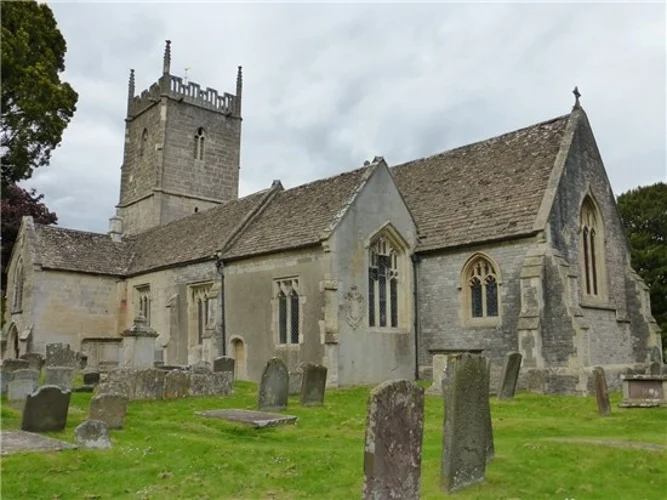
King was baptised on 28 February 1796 at Frampton-on-Severn in Gloucestershire alongside his twin sister Elizabeth. He was the son of John Charles and Ann Roper and one of sixteen children born to the couple. Sixteen children is the sort of number that causes modern readers to quietly reassess their own household arrangements. Even by the standards of the period, it must have been a busy family.

Large families were common throughout rural England and reflected both the realities of agricultural life and the absence of reliable family planning. They also existed alongside a far harsher reality than many modern families experience. Several of King’s siblings died during infancy, a reminder that behind every neatly written parish entry sits a much more difficult story. During the early nineteenth century, childhood mortality remained stubbornly high, with infectious diseases claiming many young lives long before they reached adulthood. Parish registers record these events with remarkable brevity. A baptism is followed by a burial, often only months later, the life of a child reduced to two short entries written in fading ink.
The Charles family formed part of the agricultural community of the Severn Vale, a landscape of fertile farmland, scattered villages, and seasonal labour. Frampton-on-Severn itself was one of the larger settlements in the area, centred around its distinctive village green and surrounded by working farms. Although the Regency period is often remembered through images of elegance and refinement, most rural families experienced a life shaped less by social engagements and more by fluctuating food prices, uncertain employment, poor harvests, and the constant demands of physical labour. For labouring families such as the Charleses, survival and stability were likely of far greater concern than anything taking place in London’s fashionable drawing rooms.
At some point between his baptism and adulthood, King appears to have moved to neighbouring Eastington. Unfortunately, this period falls before the detailed census returns upon which family historians rely so heavily, leaving much of his early life obscured. This is one of the recurring frustrations of researching ordinary people during the late eighteenth century. Whilst members of the aristocracy often left behind letters, diaries, portraits, and extensive estate records, labouring families frequently emerge only briefly within parish registers before disappearing once more into the documentary shadows.
Courtship, Marriage and Six Children
King next appears with certainty in May 1822 when he married Hester Grafton at St Mary the Virgin, Frampton-on-Severn. Hester presents something of a mystery herself. She was born in Oswestry, Shropshire, yet appears in Gloucestershire by the time of the marriage. How she came to be there remains unknown, although movement in search of employment was by no means unusual. Domestic service, agricultural work, apprenticeships, and family connections frequently resulted in individuals relocating considerable distances from their birthplace.

Whatever route brought them together, the marriage appears to have been followed swiftly by the arrival of their first child. Caroline was baptised on 9 July 1822, only a matter of weeks after the wedding. The chronology requires very little additional commentary. Suffice to say that not every Regency courtship progressed at a leisurely pace, and parish registers occasionally reveal that practical considerations could sometimes overtake strict adherence to social convention.
When Caroline was baptised, King was described as a servant. To modern readers, the term often suggests domestic employment within a grand household, yet in rural Gloucestershire it is equally possible that he was employed as a farm servant. Agricultural servants formed an essential component of the rural workforce and were commonly hired on annual or half-yearly contracts. Many lived on the farms where they worked, receiving food and accommodation alongside modest wages. The work was physically demanding and frequently involved long hours tending livestock, cultivating crops, maintaining hedgerows, and undertaking whatever labour the agricultural calendar demanded.
By the baptism of the couple’s second daughter, Elizabeth, in 1824, King’s occupation had changed to that of labourer. Whether this reflected a genuine change in employment or merely a different description recorded by the parish clerk is impossible to determine. Nevertheless, it firmly places him amongst the large population of agricultural labourers whose efforts sustained both local communities and the wider British economy.
Together, King and Hester had six children: Caroline, Elizabeth, Harriet, George, Thomas, and Eliza. Their growing household was typical of many rural families during the period, balancing the demands of work, childcare, and survival within a society that offered little support when hardship struck.
Labouring Through the Regency
Whilst King’s life was shaped by agriculture, the wider world around him was changing. Frampton-on-Severn was influenced not only by farming but also by developments in transport and trade, including the construction of the Gloucester and Sharpness Canal between 1794 and 1827. Although there is no evidence that King worked directly upon the canal, he would certainly have witnessed its gradual construction and the opportunities it created for local communities.
This wider context serves as a useful reminder that the Regency period was not simply an age of fashionable society and political intrigue. It was also a period of technological development, economic uncertainty, and social transformation. Population growth increased pressure upon resources, infrastructure projects altered local economies, and agricultural communities found themselves increasingly connected to wider markets. Such changes were experienced most directly by working families, even if they rarely appear in traditional histories of the period.
For labourers such as King, life was likely characterised by long hours, modest wages, and limited security. Yet it is easy to underestimate the skill involved in agricultural labour. Maintaining livestock, managing crops, preserving hedgerows, and responding to seasonal demands required considerable practical knowledge. The food consumed in towns and cities, the maintenance of the countryside, and the operation of rural communities all depended upon the efforts of individuals such as King Charles.
Loss and New Beginnings
Unfortunately, life was about to become considerably more difficult.
In January 1834, Hester was buried at Frampton-on-Severn at the age of just thirty. No cause of death was recorded. Parish registers rarely provide such details, leaving modern researchers to speculate cautiously. Tuberculosis, then commonly known as consumption, remained widespread throughout rural England and was responsible for many deaths amongst young adults. Whatever the cause, Hester’s passing left King widowed with a young family to support. The brevity of the burial entry contrasts sharply with the significance of the event itself. A life that had occupied thirty years is reduced to a few lines of ink on a parish page.
Curiously, the records reveal another small mystery. In April 1833, banns were published for a King Charles and Elizabeth Meprade in Frampton-on-Severn. No corresponding marriage appears in the register, nor is any explanation provided. Whether this reflects a clerical error, a different individual entirely, or a marriage that simply never took place remains unclear. Family historians become accustomed to such loose ends. Records have an irritating tendency to answer one question whilst creating three more.
Whatever the explanation, King remarried on 11 October 1835. His second wife was Ann Davis, and the ceremony again took place at St Mary the Virgin. Together they had five children: Emma, William, Sophia, Martha, and Edwin. By this point, the household had become impressively large. Moderation, it would appear, was not a defining characteristic of nineteenth-century family life.
A Family in a Changing England
The years that followed saw England enter a new era. Queen Victoria’s accession in 1837 marked the end of the Regency world and the beginning of a period of rapid social, industrial, and technological change. In villages such as Frampton-on-Severn, celebrations of Victoria’s coronation in 1838 likely brought communities together through feasts, games, church bells, and public festivities.
Perhaps more importantly for future family historians, the Victorian era also ushered in increasingly detailed record-keeping. The 1841 Census provides the first comprehensive glimpse of King’s household, placing him, Ann, and several of their children in Frampton-on-Severn. Although no precise address was recorded, the census reveals a family continuing much as before: working, raising children, and adapting to changing circumstances.
Several of the older children had already begun establishing lives of their own. Elizabeth, for example, appears in Birmingham, later marrying fellow labourer Thomas Nicholls. Like many young people of the period, she appears to have followed employment opportunities beyond the village of her birth.
Muddles Hole and Other Challenges
Between 1841 and 1849, the family relocated to Eastington. Such moves were common amongst labouring families and were often driven by employment opportunities rather than personal preference. Eastington was increasingly influenced by industry and trade, offering new possibilities for work as traditional agricultural communities adapted to wider economic change.
Tragedy struck once again in 1850 when Ann died. King found himself widowed for a second time. Beyond the emotional impact of such a loss lay a more immediate challenge: maintaining a household and supporting several dependent children. Grief did not arrive neatly separated from practical concerns. Work still needed completing, bills still required paying, and children still needed feeding. For many nineteenth-century families, there was little opportunity to pause.
By 1851, King was living at the wonderfully named Muddles Hole in Eastington. As place names go, it does rather sound as though somebody simply surrendered halfway through the naming process. Here he appears as a labourer, living with several of his younger children within a community increasingly shaped by both agriculture and industry. Whether he contributed to new building projects, worked in associated trades, or remained primarily engaged in agricultural labour is impossible to determine. As ever, the records remain frustratingly silent precisely when one would like them to be most forthcoming.

Coming Full Circle
By 1861, King had returned to Frampton-on-Severn and was living along Frampton Street with several of his younger children. Why he returned remains uncertain. Familiarity, employment opportunities, family connections, or simple practicality may all have played a role. Whatever the reason, the village that had witnessed his baptism once again became his home.
In 1870, King Charles died and was buried at Frampton-on-Severn. There was no grand monument, no title, and no lasting public recognition. His life was not recorded in newspapers or commemorated in local histories. Yet he left behind something far more enduring: generations of descendants and a story that speaks powerfully to the experiences of ordinary people during a period of profound national change.
What Ordinary Lives Can Teach Us
It would be easy to dismiss King Charles as an ordinary man. He left behind no diary, owned no estate, and appears in the historical record only when officialdom required him to do so. Yet his life tells us a great deal about the realities of living through the Regency period. He experienced the uncertainties of agricultural employment, raised a large family, buried two wives, adapted to economic change, and witnessed England move from the reign of George III into the age of Queen Victoria.
In many ways, it is precisely because his life was ordinary that it matters. Most people living through the Regency looked far more like King Charles than they did the aristocrats who dominate popular portrayals of the period. Their stories may not have altered the course of history, but they formed the fabric of it.
The King Charles Problem
And just when I thought I had finally untangled the story of King Charles, family history delivered one final surprise.
This King Charles is not the only King Charles.
As it turns out, I appear to have stumbled into a considerably larger King Charles problem than any reasonable genealogist should be expected to manage. Unfortunately for me, and perhaps fortunately for you, that mystery will have to wait for another day.




Leave a Reply