
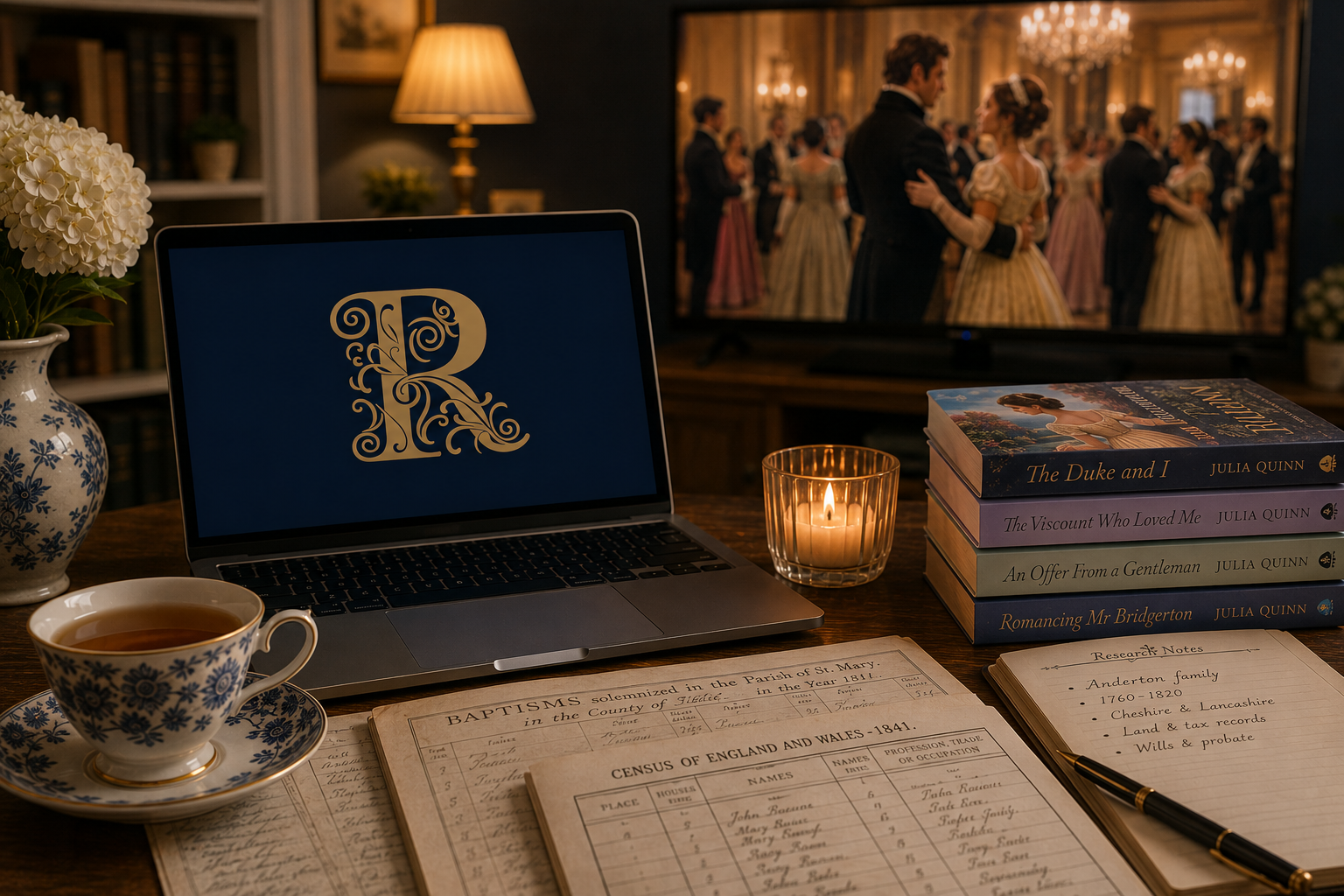
I should probably begin with a confession: I am a Bridgerton fan. This fact will surprise absolutely nobody who knows me. My friends have reached the point where any mention of Bridgerton is often met with a collective groan, largely because they know there is a reasonable chance I am about to steer the conversation towards the latest season, a particular storyline, or, more often than not, Benedict Bridgerton. While they generally enjoy the series themselves, I have perhaps devoted slightly more thought to the various Bridgerton siblings than any sensible adult ought to. For reasons I cannot fully explain, Benedict has long been my favourite character. Perhaps it is his artistic nature, his tendency to challenge expectations, or perhaps it is simply that Luke Thompson brings a great deal of charm and humour to the role. Whatever the explanation, my friends can usually predict where a conversation is heading before I get there.
The irony, of course, is that I spend a significant amount of my free time researching the real Regency period. I read parish registers for fun, willingly spend hours examining wills, tax records, newspapers, maps, and the occasional piece of handwriting that appears to have been produced by somebody balancing on a horse during an earthquake. I write articles about Regency social history, spend weekends in archives, and have been known to travel considerable distances in pursuit of a single historical record. In short, I know perfectly well that Bridgerton is not an accurate depiction of Regency life. Yet despite this, or perhaps partly because of it, I love the series anyway. The more I have thought about this apparent contradiction, the more I have wondered whether historians and family historians sometimes place unnecessary pressure on themselves when it comes to historical fiction. There can be a sense that if we know too much about a period, we are somehow obliged to spend our time identifying inaccuracies rather than enjoying the story. Personally, I think that misses the point entirely.
Historians Are Allowed to Have Fun
One of the stranger assumptions about historians is that we spend our lives being irritated by historical dramas. Popular culture often portrays historians as people who sit through period dramas armed with a notebook, eagerly waiting to identify every inconsistency before announcing it to anyone unfortunate enough to be sitting nearby. While I cannot entirely deny having occasionally pointed out a historical inaccuracy, I suspect most historians are far more interested in the quality of the storytelling than they are in compiling a list of errors. Historical accuracy matters because it helps us understand the past and the people who lived there, but historical fiction is not attempting to achieve the same thing as historical scholarship. The two overlap, certainly, but they serve different purposes.
History seeks to understand what happened and why. Historical fiction seeks to create an engaging narrative that captures an audience’s imagination. Sometimes these objectives align neatly, while at other times artistic licence takes precedence over strict accuracy. That does not necessarily diminish the value of either approach. Indeed, some of the most successful historical novels and television dramas have inspired people to learn more about periods they might otherwise have ignored. Curiosity rarely arrives in a perfectly organised academic package. More often, it begins with a story.
Bridgerton Was Never Trying to Be a Documentary
Many of the criticisms levelled at Bridgerton are perfectly fair. Its version of the Regency is cleaner, brighter, more glamorous, and considerably more attractive than reality. The costumes frequently draw inspiration from periods beyond the Regency itself, the social rules are simplified, and the lives depicted bear little resemblance to those of most people living in Britain during the early nineteenth century. Yet none of this feels particularly surprising because Bridgerton was never intended to function as a documentary.

Nobody settles down to watch Bridgerton expecting a detailed exploration of agricultural depression, poor relief, enclosure, industrialisation, or the long-term consequences of the Napoleonic Wars. It is a romance set within a Regency-inspired world, and it succeeds because it embraces that identity wholeheartedly. The series is visually beautiful, emotionally engaging, and unapologetically entertaining. It understands exactly what it wants to be and makes no attempt to disguise the fact. In truth, I sometimes think it is criticised for failing to do things it was never trying to do in the first place.
I was introduced to the Bridgertons through Netflix and, after watching the first two series, found myself sufficiently invested in the characters to seek out Julia Quinn’s novels. Having since read the books, I can see that the television adaptation departs from the original stories in various ways. Some storylines have been expanded, timelines altered, and characters developed differently, but this is hardly unusual. Adaptations have always involved interpretation. The books and series are related, but they are not identical, and I have found it perfectly possible to enjoy both without requiring either to conform exactly to my expectations.
The Real Regency Was Fascinating Too
Enjoying Bridgerton does not mean believing the real Regency period was less interesting. If anything, the opposite is true. One of the reasons I find the era so compelling is because it was a period of extraordinary change. Britain was emerging from years of conflict, industrialisation was transforming communities, and social and economic structures were shifting in ways that would shape the nineteenth century. Opportunities expanded for some while hardship deepened for others. Migration, urbanisation, poverty, political unrest, and technological innovation all formed part of the complex tapestry of Regency life.

Most of our ancestors were not aristocrats. They were labourers, servants, tradespeople, farmers, sailors, soldiers, and artisans trying to navigate a rapidly changing world. Their lives rarely resembled anything seen in Bridgerton, yet they were no less dramatic. Family historians regularly encounter stories of resilience, loss, determination, migration, scandal, and survival. The records may be quieter than a Netflix script, but the human experiences they contain are every bit as compelling. Some of the most remarkable stories I have encountered have involved people who never appeared in a ballroom and never exchanged a lingering glance across a crowded dance floor.
Why Bridgerton Works
Part of Bridgerton‘s appeal is undoubtedly escapism. Modern life can feel relentlessly practical. Most of us spend our days managing work commitments, household responsibilities, appointments, deadlines, emails, and increasingly complicated passwords. Against this backdrop, the world presented by Bridgerton offers something entirely different. It is colourful, romantic, optimistic, and visually spectacular. The problems faced by its characters may be dramatic, but they are rarely mundane, and there is a certain comfort in spending an hour immersed in a world where the greatest concern is whether two attractive people will eventually admit their feelings for one another.
There is also something reassuringly timeless about the themes at the heart of the story. Love, friendship, family expectations, ambition, grief, insecurity, belonging, and self-discovery remain just as relevant today as they were two centuries ago. The social conventions may have changed, but the emotions remain remarkably familiar. Perhaps that is why historical fiction continues to resonate so strongly with audiences. While we may never attend a Regency ball, we understand what it feels like to hope, worry, love, lose, and occasionally make spectacularly poor decisions. Human nature, it turns out, changes rather less than fashion.
Beyond the Ballroom
One of the things I genuinely appreciate about Bridgerton is its ability to spark curiosity about the past. Many people do not arrive at history through academic study. They arrive through novels, films, television series, museums, family stories, or a chance encounter with something that captures their imagination. Interest often begins with entertainment before developing into something deeper. In my own case, the television series encouraged me to explore the books. For others, it may inspire an interest in Regency fashion, architecture, social history, or even genealogy. As family historians, I think that is something worth celebrating rather than dismissing.

Perhaps this is why I see no contradiction between enjoying Bridgerton and researching the real Regency period. One provides entertainment, escapism, and a beautifully imagined world. The other provides context, understanding, and insight into the lives of real people. Enjoying one does not diminish appreciation for the other. Indeed, I suspect many family historians live quite happily in both worlds. We can spend an afternoon analysing parish registers and probate records before settling down in the evening to watch a historically questionable period drama without experiencing the slightest sense of conflict.
The popularity of Bridgerton tells us something important about how people engage with history. Most viewers are not looking for perfect historical accuracy. They are looking for stories, emotions, humour, beauty, and connection. Historical fiction provides a gateway into the past, even when the version presented is heavily romanticised. As somebody who researches Regency lives, enjoys Regency fiction, and still finds herself defending Benedict Bridgerton in entirely unnecessary conversations, I find that perfectly understandable. History and entertainment do not have to compete with one another. Sometimes they can even encourage one another, even if my friends never want to hear another word about Benedict.
This article is dedicated to the fantastic bunch of friends who love me for the weirdo I am… or is it that they just can’t get rid of me?




Leave a Reply