Family historians sometimes have a habit of making assumptions based on occupations. A labourer sounds poor. A farmer sounds comfortable. A shopkeeper sounds respectable. Yet occupations tell us remarkably little about how much money someone actually had at the end of the week. They tell us how a person earned a living, but not whether that living was secure, comfortable, or constantly under threat from circumstances beyond their control.
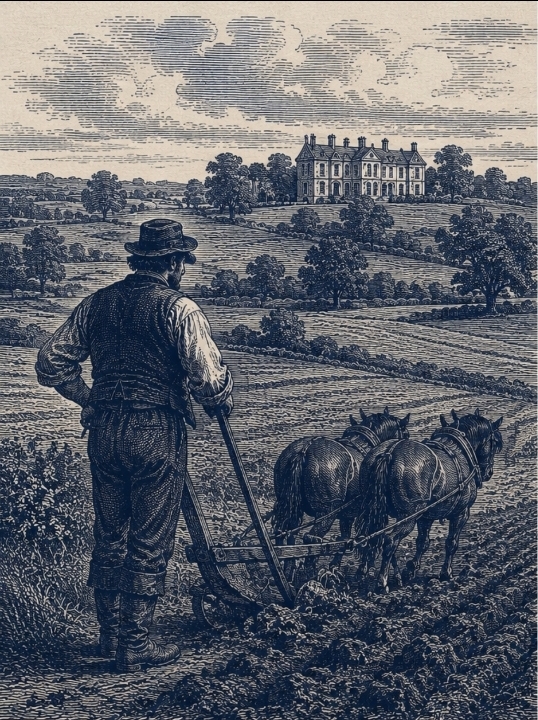
This question occurred to me while researching one of my own ancestors, Francis Anderton, a tenant farmer in Warwickshire during the Regency period. Unlike the great landowners who dominated rural Britain, tenant farmers did not own the land they worked. Instead, they rented it from a landlord, paying regular rent in return for the right to farm it. This placed them in an interesting position within rural society. They generally enjoyed greater independence and status than agricultural labourers, who worked for wages on someone else’s farm, but they lacked the security that came with land ownership. A successful tenant farmer could build a comfortable living, employ labourers, and establish a respected position within the community. Equally, however, they remained vulnerable to poor harvests, rising rents, disease among livestock, and fluctuations in agricultural prices. In modern terms, they were perhaps closer to small business owners than employees, balancing opportunity and risk in equal measure.
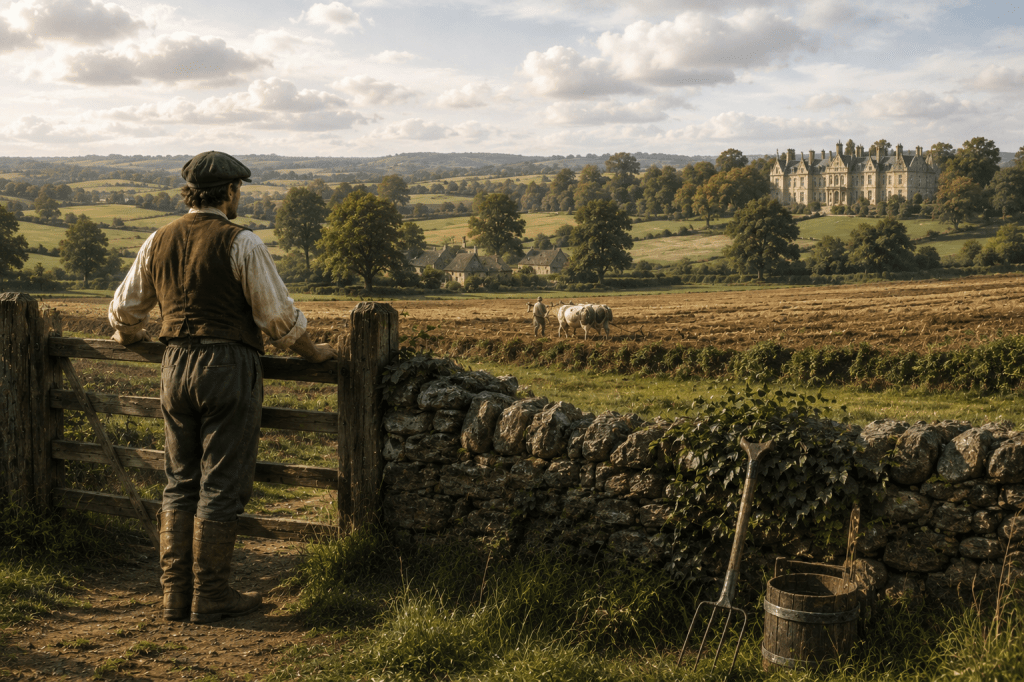
On paper, Francis appears reasonably established. Records show that he occupied farmland owned by the Marquess of Buckingham, paid the Poor Rates, and served as a juror. These are all indicators of a man with a degree of standing within his local community. Yet the more I began to explore the financial realities of Regency Britain, the more I found myself wondering whether respectability and prosperity were necessarily the same thing.
The Regency period has acquired a rather glamorous reputation in popular culture. Depending on your preferred source of entertainment, it was apparently a time spent attending balls, exchanging meaningful glances across crowded drawing rooms, and wandering around country estates looking effortlessly elegant. The reality for most people was rather less romantic. While a small proportion of society enjoyed considerable wealth, the vast majority of Britons were concerned with much the same things as people today: paying their bills, feeding their families, coping with rising prices, and hoping that nothing unexpected happened to upset the household finances.
For much of the late eighteenth and early nineteenth centuries, Britain was at war. The French Revolutionary and Napoleonic Wars dominated the lives of an entire generation, and although many ordinary people never saw a battlefield, they certainly paid for them. Wars are expensive undertakings, requiring ships, weapons, supplies, transport, and thousands of soldiers. By the time Napoleon was finally defeated in 1815, Britain had accumulated a national debt on a scale previously unimaginable. Governments have never possessed a magical pot of money hidden away for emergencies, so the solution was familiar: borrowing and taxation.
Income tax was introduced in 1799 as a wartime measure, but it was only one element of a much wider system designed to generate revenue. Regency households encountered taxes and duties in all sorts of places. Soap was taxed. Candles were taxed. Salt was taxed. Malt was taxed. Leather was taxed. Paper was taxed. Beer was taxed. Bricks were taxed. Even windows were taxed. The infamous Window Tax had existed for more than a century by this point, but it remained a visible reminder that governments will occasionally look at an everyday object and decide it represents an untapped source of income.
The Window Tax also demonstrates how people responded to such measures. Across Britain, homeowners bricked up windows to reduce their tax liability, creating houses that were darker, less ventilated, and often less healthy. It is a reminder that people in the past were no more enthusiastic about paying taxes than they are today. The methods may have changed, but the instinct to reduce one’s tax bill appears to be a longstanding national tradition.
The cumulative effect of these taxes was significant. Every household purchase carried a hidden cost. Every candle burned after sunset, every bar of soap used on washday, and every piece of paper purchased for business purposes existed within a wider system of taxation. For families already balancing tight budgets, these costs mattered.
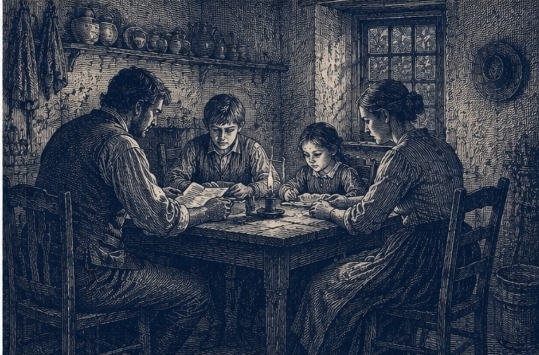
At the same time, the price of food could fluctuate dramatically. Harvests remained heavily dependent upon weather conditions, transport networks were limited, and poor harvests could lead to rising prices. Fuel, clothing, rent, and household necessities all competed for a share of the family income. While modern discussions of the cost of living often focus on energy bills and supermarket prices, the underlying principle would have been entirely familiar to a Regency family. Life was expensive, and there was often very little room for error.
This is where records such as the Poor Rates become particularly interesting. Most family historians will encounter them eventually, but they are not always well understood. Poor Rates were local taxes collected by parishes to support those unable to support themselves. The money helped fund relief for widows, orphaned children, elderly residents, and those unable to work because of illness or disability. In effect, they formed a local welfare system long before the creation of the modern welfare state.
The fact that Francis paid the Poor Rates rather than receiving them tells us something useful about his position within the community. He was contributing towards the support of others, suggesting a degree of financial stability and local standing. It does not necessarily mean he was wealthy. Many people who paid local taxes would not have considered themselves prosperous. Nevertheless, it indicates that he occupied a different position from those relying upon parish relief.
The same can be said of his service as a juror. Today, jury service is largely random. During the Regency period, however, jurors were generally drawn from men considered respectable and responsible members of society. Service reflected standing within the community and a degree of trust from one’s peers. Once again, the records suggest that Francis was doing reasonably well. Yet they do not tell us how secure that position really was.
That distinction is important because financial security and social respectability are not always the same thing. A tenant farmer might appear successful while still worrying about rent, harvests, livestock, taxation, and rising costs. One poor season, a run of bad weather, an outbreak of disease among animals, or a downturn in local markets could quickly alter circumstances. The same records that suggest stability also hint at vulnerability.
Perhaps this is why I find social history so fascinating. It allows us to move beyond simple labels and ask more complicated questions. Rather than seeing Francis Anderton merely as a tenant farmer, we can begin to understand the economic world in which he lived. He occupied rented land during a period of war, paid taxes both local and national, contributed to the support of poorer members of his community, and navigated an economy shaped by uncertainty. In many respects, that feels far more relatable than the polished image of Regency society that often dominates popular culture.
The more I learn about the finances of the Regency period, the less distant they seem. Our ancestors worried about rising costs, taxation, and economic uncertainty just as we do today. The specifics have changed, but the underlying concerns remain remarkably familiar. Looking at records such as tax lists, jury rolls, and parish accounts reminds us that behind every occupation was a real person attempting to balance income, expenses, obligations, and family responsibilities in a world that could change unexpectedly.
Perhaps the question is not whether our ancestors were better off than we think. Perhaps it is whether they were quite as different from us as we sometimes imagine.