
If recent television schedules are anything to go by, the Regency era is having something of a revival. Between Bridgerton, The Other Bennet Sister, and yet another cinematic adaptation of Bronte’s Wuthering Heights, one could be forgiven for thinking that the early nineteenth century consisted entirely of attractive people exchanging meaningful glances across crowded ballrooms while wearing impossibly elegant clothing.
As someone who spends a great deal of time researching the lives of ordinary people during this period, usually accompanied by a cup of tea and a growing collection of unanswered questions, I can confirm that the reality was rather more complicated.
The Regency was certainly an age of fashion, architecture, literature, and social display. It gave us grand houses, spectacular gowns, and enough scandal to keep modern television writers occupied for years. Yet it was also a period of war, poverty, displacement, industrial change, and social upheaval. While a fortunate few danced their way through London society, many more were simply trying to earn a living, feed their families, and adapt to a rapidly changing world. To understand the Regency properly, we need to look beyond the ballrooms.
When Exactly Was the Regency?
This should be a straightforward question. Unfortunately, historians have a habit of making even the simplest questions slightly complicated.
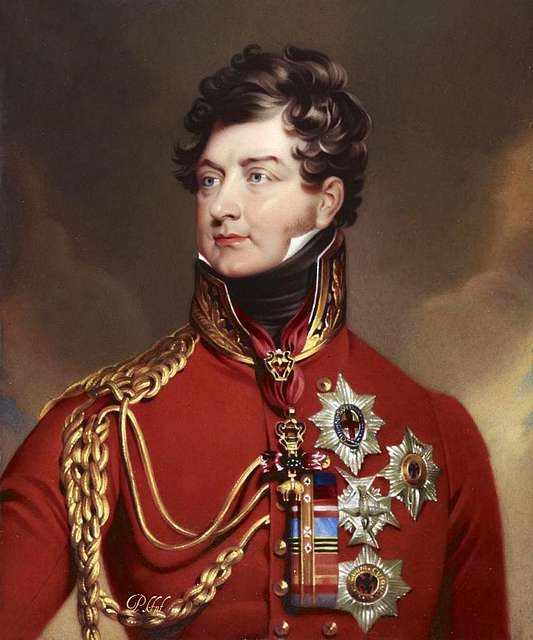
Officially, the Regency lasted from 1811 until 1820. During this period, George, Prince of Wales, ruled on behalf of his father, King George III, whose deteriorating mental health meant that he was no longer able to govern effectively. Parliament passed the Regency Act in 1811, formally appointing the Prince as Regent, and when George III died in 1820, his son became King George IV.

From a constitutional perspective, that is the Regency neatly explained. In practice, however, many historians use the term far more broadly. It is common to see the Regency extended from around 1780 through to 1837, encompassing the later Georgian period, the reign of George IV, and even the brief reign of William IV before Queen Victoria came to the throne. The reason for this is simple: social and cultural change rarely respects tidy dates. Fashions, attitudes, and ways of life tend to drift gradually into existence and are often reluctant to leave when historians would prefer them to.
For most people today, the Regency is less a specific set of years and more a particular atmosphere. It conjures images of elegant drawing rooms, country estates, fashionable promenades, and carefully managed social lives. Yet beneath that polished surface was a society experiencing enormous change.
Elegance in an Age of Upheaval
The Prince Regent himself was a man who appreciated luxury. In fact, “appreciated” may be putting it mildly. If there was an opportunity to spend money on architecture, art, fashion, entertaining, or generally making something more elaborate than it strictly needed to be, he was usually enthusiastic about embracing it.
His influence can still be seen today in many of the buildings, fashions, and cultural developments associated with the period. The Royal Pavilion at Brighton remains perhaps the most famous example, a building that appears to have looked at traditional British architecture and decided it simply was not ambitious enough.

While the upper classes enjoyed unprecedented levels of comfort and display, Britain itself was facing considerable challenges. The country was engaged in the Napoleonic Wars, economic instability was a recurring problem, and many ordinary families faced genuine hardship. Food prices fluctuated, employment could be uncertain, and rapid social change created both opportunities and difficulties.
This contrast between elegance and adversity is one of the reasons the Regency remains so fascinating. The period was neither wholly glamorous nor wholly bleak. Instead, it was a society attempting to maintain refinement and stability while navigating profound political, economic, and social transformation.
Modern audiences are often drawn to productions such as Bridgerton because they capture some of these themes. While the costumes and storylines may occasionally prioritise entertainment over historical accuracy, the obsession with status, reputation, advantageous marriages, and social standing was very real. Regency society placed enormous importance on appearances, even when the reality beneath the surface was rather less polished. Which, when you think about it, is not entirely unfamiliar to us now…
The London Season: Society on Display
If there is one aspect of the Regency that has become firmly embedded in popular culture, it is the London Season.
By the late eighteenth century, wealthy families routinely left their country estates and travelled to London for a succession of social events that could last several months. Balls, concerts, dinners, assemblies, theatre visits, and private parties filled the calendar. The aim was partly entertainment, partly networking, and, for many families, partly matchmaking. One suspects the social diary alone must have been exhausting.
Among the most prestigious events was Queen Charlotte’s Ball, which began as a charitable fundraiser supporting a maternity hospital. Over time it became one of the most important occasions of the social season and an opportunity for young women to be introduced into fashionable society.
For debutantes, the process was highly structured. Typically aged seventeen or eighteen, they would be formally presented at court before embarking on a carefully choreographed programme of social engagements. Dances, dinners, races, concerts, and assemblies offered opportunities to form connections and, ideally, secure a suitable marriage.
Popular portrayals of the Regency understandably focus on this glittering world because it makes excellent television. Unfortunately for television producers, most people’s ancestors were far too busy earning a living to spend their evenings exchanging witty remarks beneath crystal chandeliers.
A Very Different Regency
While London’s elite attended balls and cultivated social connections, much of Britain was facing a very different set of concerns.
The period was shaped by the continuing effects of the Industrial Revolution, the disruption caused by the Napoleonic Wars, rapid population growth, and significant economic uncertainty. In 1816, the country also experienced what became known as the Year Without a Summer, when unusual climatic conditions contributed to poor harvests and rising food prices.
These were not distant political events that affected only those in positions of power. They shaped the daily lives of ordinary people throughout the country. Employment opportunities shifted, living costs increased, and communities were forced to adapt to changing circumstances.
This is often the point at which family history becomes particularly interesting. It is one thing to know that an ancestor worked as a labourer, a servant, or a tradesman. It is quite another to understand the world they were living in and the challenges they faced. Historical context transforms names and dates into real people with real concerns. And, as many family historians eventually discover, those concerns often look surprisingly familiar.
Displacement, Development & the Price of Progress
One of the most significant developments affecting rural communities was the continued enclosure of agricultural land.
The Inclosure Act 1773 made it easier for landowners to consolidate smaller plots into larger enclosed farms. From an agricultural perspective, this often improved efficiency and productivity. From the perspective of many ordinary families, however, the picture was considerably less positive.

For generations, rural communities had relied upon common land for grazing animals, gathering fuel, and supplementing household incomes. As land became enclosed, access to these resources disappeared. It was precisely the sort of policy that appeared sensible if one happened to own the land and considerably less appealing if one relied upon it to survive.
The consequences could be severe. Small farmers struggled to compete, labourers found employment increasingly uncertain, and many families faced displacement. Communities that had existed for generations were gradually transformed as people searched for alternative ways to support themselves. For some, this meant adapting to changing agricultural practices. For others, it meant leaving entirely.
The Pull of the City
If the countryside could no longer provide opportunities, many people looked towards Britain’s growing towns and cities.
London in particular attracted huge numbers of migrants seeking employment and a better future. Throughout the eighteenth century, the capital expanded dramatically, becoming one of the largest cities in the world. It offered opportunity, excitement, and the possibility of starting again. Unfortunately, several hundred thousand other people had exactly the same idea.
As the population grew, housing struggled to keep pace. Developers responded quickly, constructing densely packed accommodation wherever space could be found. Overcrowding became an increasing problem, particularly in poorer districts. Some of the conditions that would later become associated with Victorian slums were already beginning to emerge during the Regency period.
What is particularly fascinating is that social divisions were often far less clear-cut than we imagine today. Wealth and poverty existed side by side. Merchants, skilled tradespeople, labourers, and the poor frequently occupied the same districts and sometimes even the same streets. The neat separation between rich and poor that often appears in historical dramas was not always reflected in reality. The Regency city was a far more complicated and interconnected place than popular culture sometimes suggests.
Looking Beyond the Ballrooms
Perhaps this is what I find most compelling about the Regency era. Popular culture naturally gravitates towards princes, aristocrats, and grand houses because they leave behind impressive buildings, dramatic stories, and excellent costume opportunities. Yet the vast majority of people experienced the period very differently.
They worried about work, housing, food prices, illness, and supporting their families. They moved in search of opportunity, adapted to changing industries, and navigated a society undergoing profound transformation. Their lives may not have been documented in society columns, but they were every bit as important to the story of the period. Indeed, family history has a habit of reminding us that ordinary lives are often far more representative than extraordinary ones.
In the next post, I shall be turning my attention to my own Regency-era ancestors. Were they among those leaving the countryside in search of opportunity? Did they find themselves caught up in the growth of Britain’s towns and cities? Or were they quietly getting on with life while princes, politicians, and fashionable society occupied the headlines?
As ever, the answers are unlikely to be straightforward. They are, however, almost certainly hiding somewhere in a parish register, a census return, or an archival record that I shall inevitably convince myself will take “just five minutes” to investigate before emerging several hours later wondering where the afternoon went.





Leave a Reply