The recent spell of unusually warm weather has prompted the familiar British habit of discussing the climate. Newspapers offer advice on staying cool, social media fills with complaints about sleepless nights, and conversations inevitably turn to whether summers are becoming hotter than they used to be. Whilst many discussions about extreme weather focus on modern climate change, Regency Britons were no strangers to climatic disruption. They experienced bitter winters, damaging floods, prolonged droughts and harvest failures, all without central heating, refrigeration, modern medicine or reliable transport networks. For most people, weather was not simply a topic of conversation. It influenced what food was available, how much it cost, whether work could continue, and sometimes whether families could make it through difficult years.
The Regency period coincided with the closing stages of what historians and climatologists commonly describe as the Little Ice Age, a prolonged period of cooler temperatures and increased climatic variability affecting parts of Europe and North America between the fourteenth and nineteenth centuries. The term can be slightly misleading, as it was not a continuous era of freezing weather. Instead, people experienced a succession of severe winters, wet summers, storms, droughts and unpredictable seasonal conditions. In an agricultural society heavily dependent upon successful harvests, even relatively short periods of unusual weather could have consequences that extended far beyond personal comfort.
Unlike modern Britain, Regency communities possessed limited protection from environmental shocks. Roads could become impassable following floods, fuel supplies might become scarce during severe winters, and poor harvests could rapidly affect the price of essential foods. The impact was rarely shared equally. Wealthier households generally possessed greater resources to absorb rising costs or temporary shortages, whilst labouring families often lived much closer to the edge of financial hardship. As a result, discussions about the weather frequently carried economic and social significance alongside concerns about the temperature itself.
Living Through a Colder Climate
When modern audiences think about extreme weather, heatwaves often come to mind. For many Regency families, severe winters presented a more immediate threat. Houses were frequently draughty and poorly insulated, while heating depended upon coal or firewood, both of which represented a considerable expense. A prolonged cold spell increased household costs at precisely the time when employment opportunities could be reduced and transport networks disrupted.
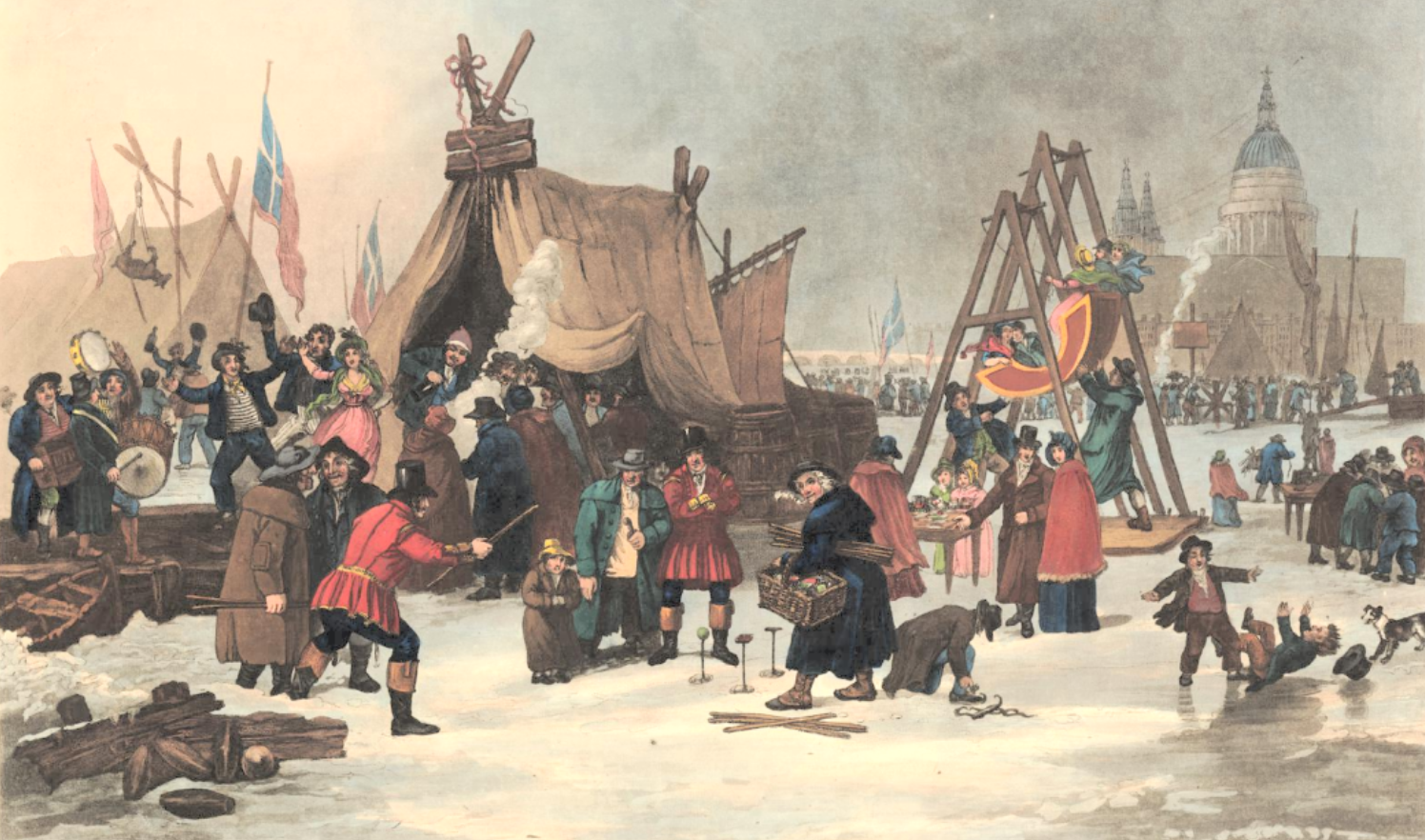
One of the most famous examples of a severe Regency winter occurred in 1814, when the River Thames froze deeply enough to support a Frost Fair. Londoners transformed the frozen river into a temporary marketplace filled with food stalls, entertainments, gambling booths and souvenir printers. Contemporary illustrations depict crowds enjoying the novelty of walking, shopping and socialising on the ice. The event has become one of the most recognisable images of Georgian and Regency Britain, often remembered as a charming historical curiosity.

Behind the festivities, however, lay a more practical reality. The freezing of a major commercial waterway disrupted transport and trade across the capital, affecting the movement of goods and people throughout the city. Conditions severe enough to support a Frost Fair were also severe enough to create hardship for many Londoners. The winter of 1814 proved to be the last occasion on which the Thames froze sufficiently for such an event, making the Frost Fair both a remarkable spectacle and a reminder of the colder climatic conditions experienced during the final phases of the Little Ice Age.
Summer Heat in the Regency
Although the broader climate was generally cooler than that experienced during much of the twentieth century, Regency Britain was not immune to periods of intense summer heat. Letters, diaries and newspapers contain numerous references to unusually warm weather, demonstrating that heatwaves were very much part of the historical landscape. One of the most familiar observations comes from Jane Austen, who wrote to her sister Cassandra in September 1796, “What dreadful hot weather we have! It keeps one in a continual state of inelegance.”
Austen’s remark was characteristically humorous, but it offers a glimpse into the reality of coping with heat before the arrival of modern conveniences. Most people continued working regardless of the temperature. Agricultural labourers spent long days in the fields, domestic servants worked beside constantly burning ranges, and artisans often occupied crowded workshops with limited ventilation. There were no electric fans, refrigerated drinks or air-conditioned offices to provide relief.
Buildings themselves formed an important defence against summer temperatures. Thick masonry walls, high ceilings, shutters and carefully positioned windows helped regulate indoor conditions, whilst daily routines could sometimes be adapted to make use of the cooler parts of the day. The ability to avoid the worst effects of the heat remained closely linked to wealth and social status. Members of the landed elite could retreat to country estates or fashionable seaside resorts, whereas labouring families generally had little choice but to continue their daily routines in whatever weather arrived.
Ice Houses and Elite Comfort
One of the more ingenious responses to seasonal extremes was the widespread construction of ice houses on country estates during the eighteenth and early nineteenth centuries. These underground structures were designed to store ice harvested during the winter months and preserve it throughout the summer. Built below ground and insulated with layers of straw and earth, many were capable of keeping ice frozen for several months.

The contents of an ice house offered a glimpse into elite Regency life. Stored ice could be used to preserve food, cool wine and punch, and produce fashionable desserts that became increasingly popular amongst wealthy households. Chilled refreshments represented both comfort and status, demonstrating the resources available to those at the upper end of society.
The existence of ice houses also highlights the unequal experience of weather in Regency Britain. Whilst some households enjoyed iced desserts during the summer months, others faced the far more pressing concern of whether poor weather might affect the price of bread.
Weather, Harvests and Food Security
The most significant consequences of extreme weather were often indirect. Britain remained overwhelmingly dependent upon agriculture, and the success of a harvest was closely tied to seasonal conditions. Excessive rainfall could damage crops, drought could reduce yields, and unseasonable cold might delay growth or destroy produce altogether. In a society with limited food preservation and far less access to imported produce than we enjoy today, poor harvests could have serious consequences within a relatively short period of time.
Contemporaries understood this relationship very well. Newspapers regularly reported on crop conditions and harvest prospects, whilst government officials monitored grain supplies with considerable interest. Bread formed a substantial proportion of the diet for many working families, making fluctuations in grain prices a matter of genuine concern. Rising food costs could quickly place pressure on household budgets and contribute to social unrest, particularly during periods of wider economic uncertainty.
Weather therefore occupied a position that extended far beyond personal inconvenience. A wet summer or failed harvest could affect employment, food prices, public order and political debate. Discussions about the weather were often discussions about the wider health of society itself.
The Year Without a Summer
No event illustrates the connection between weather and everyday life more clearly than the so-called Year Without a Summer in 1816. The origins of this extraordinary year lay thousands of miles away in present-day Indonesia, where Mount Tambora erupted in April 1815. One of the most powerful volcanic eruptions in recorded history, Tambora released vast quantities of ash and sulphur-rich gases into the atmosphere, reducing the amount of sunlight reaching the Earth’s surface and contributing to global cooling.
The following year brought unusually cold and wet conditions across much of Europe and North America. In Britain, persistent rain and low temperatures created poor growing conditions and reduced agricultural yields. These difficulties arrived at a particularly challenging moment. The country was already adjusting to the economic consequences of the Napoleonic Wars, and many families faced financial uncertainty. Poor harvests and rising food prices added further pressure.


Although contemporaries possessed no scientific explanation for the unusual weather, they experienced its effects directly through failed crops, expensive food and worsening living conditions. The Year Without a Summer provides a powerful reminder that local weather conditions can be shaped by events occurring on the other side of the world, a reality that feels particularly familiar in the twenty-first century.
Weather and Everyday Life
For Regency Britons, the weather was far more than a backdrop to daily life. It shaped agricultural production, influenced employment, affected the cost of food and fuel, and occasionally produced remarkable spectacles such as the Frost Fair of 1814. Living during the final phases of the Little Ice Age meant adapting to a climate characterised by unpredictability and periodic extremes, often with limited means of protection from their consequences.
Modern technology has transformed many aspects of our relationship with the weather. We can heat our homes, refrigerate food, transport supplies across continents and monitor approaching storms with remarkable accuracy. Despite these advances, periods of extreme heat, flooding and climatic uncertainty continue to dominate public discussion. The concerns may differ in scale and context from those faced by Regency families, but the underlying connection remains recognisable. Climate continues to shape everyday life, just as it did more than two hundred years ago.