Beware the allure of an uncommon name, for it so often leads to the deepest rabbit holes. What began as a simple ancestral inquiry soon consumed hours, nay, days of pursuit, chasing a most elusive connection between two family lines. Consider this your gentle warning, lest curiosity carry you too far.
It is a truth seldom confessed that the pursuit of one’s ancestry can prove every bit as intoxicating, and perilous, as the grandest intrigues of the ton. What begins as a modest curiosity, a mere glance at a name upon a page, may all too swiftly descend into a most consuming preoccupation, wherein hours slip by unnoticed and reason itself takes leave.
Such was my own unfortunate entanglement when confronted with a name of uncommon distinction, appearing, most suspiciously, within multiple seemingly unrelated family trees. Surely, I thought, such rarity could not be coincidence. And so, with all the confidence of a seasoned investigator, I resolved to unite these wandering branches into one most satisfying lineage.

You may recall, dear reader, from a previous instalment that I uncovered an ancestor bearing the rather audacious name King Charles – my five-times great grandfather, no less. I assure you, I paused at the page for some time, quite certain that some overzealous transcriber had indulged in artistic licence. Yet, as the records accumulated with an almost inconvenient consistency, I was forced to concede that the name was, in fact, quite genuine.
Naturally, I did what any reasonably composed (and only mildly reckless) family historian would do: I attempted to determine whether “King” was a rare flourish of nomenclature, or simply a more widespread peculiarity of the age. Armed with an ancestry website and what I can only describe as misplaced confidence, I began my search for other “King Charles” entries.
It was at this point, dear reader, that I must confess I accidentally invited royalty into my research in rather an unmanageable quantity. King Charles I and King Charles II appeared with such enthusiasm that one might have assumed they were personally invested in my project. The result was 788 records. Seven hundred and eighty-eight. I nearly closed my laptop and took up a quieter hobby, such as crochet.
Instead, I attempted restraint. A most admirable quality in theory, far less so in practice. I refined my search to baptisms, reducing the chaos to 21 records. Still not quite “manageable,” but one must take victories where one finds them. These records revealed, to my growing alarm, that individuals named King Charles appeared across a surprisingly wide geography: London, Kent, Frampton-on-Severn (more than one, which feels unnecessarily provocative), Cambridgeshire, and Northumberland.
Now, it is here that I must accept a modicum of responsibility for what followed. Having discovered that my proven ancestors, the Frampton-on-Severn Kings, were indeed related, I allowed myself a most dangerous thought: what if all these Kings were connected? A charming idea. A seductive idea. A disastrously time-consuming idea.
And so, I did what can only be described as opening several genealogical windows at once and refusing to close any of them. I constructed a separate family tree for each King Charles I encountered and set off with unwavering determination into their pasts, fully expecting, at some point, to find a neat little intersection where all roads converged and I could bask in triumph.
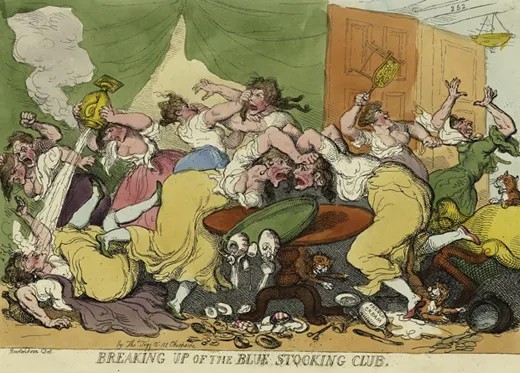
Instead, I found branches. So many branches. Some ended abruptly, as if the ancestors themselves had grown tired of being pursued. Others multiplied further Kings, as though the name were reproducing in defiance of logic. I began to feel less like a researcher and more like a reluctant curator of an ever-expanding royal exhibition.
There were moments of encouragement, of course. Outside of Frampton-on-Severn, I did uncover evidence that several of these “foreign” King Charleses were indeed related – to each other, at least. A small comfort, though not quite the grand unifying revelation I had so confidently imagined at the outset.
I pressed on regardless, tracing each line back further and further, until the records themselves began to lose their confidence. By the 1600s, things grew murkier. By the 1500s, positively atmospheric. Ink faded, entries became sparse, and I found myself squinting at documents as though sheer determination might conjure missing details into existence.
And yet, dear reader, the elusive connection, the one that began this entire escapade, remains to this day stubbornly out of reach. If there is a moral here, it is perhaps this: never underestimate an unusual name, never trust a “quick search,” and above all, never allow curiosity to whisper, “just one more tree,” unless you are prepared to lose several evenings, a lot of sleep, your sanity, and possibly your grip on historical restraint.
As one employed in the rather serious profession of research, the occasional descent into the rabbit hole is an occupational hazard. However, I feel compelled to confess that this example proves that not all such pursuits are productive, and some, if I am being entirely honest, are little more than elaborate exercises in procrastination dressed up as “important work”. Still, in the spirit of generosity (and self-preservation), I thought I might offer a few hints and tips to assist others in avoiding similar entanglements during their own family history endeavours.
1. Begin with a focussed research question
One must resist the seductive temptation of vague ambition. A precise, structured question is essential if one wishes to avoid disappearing into archival oblivion.
I find the “PEO” technique most useful, borrowed from my professional life and shamelessly repurposed for genealogy:
P – Population, Person, or Problem: Who exactly are you investigating? Be specific—names, locations, relationships.
E – Exposure: What experience, event or circumstance are you examining?
O – Outcome: What, precisely, are you hoping to discover? A certificate, a relationship, a life story uncovered?
Above all, keep it small. One person. One question. One objective.
For instance: I once attempted to determine whether my ancestor King Charles was married, in order to establish the likelihood of heirs.
Using the PEO technique:
Person – King Charles 1796-1870
Event – marriage
Outcome – was King married, who to, and where and when did this occur?
So the structured, focussed question I’m answering with the time I have is, “Was King Charles married? If so to whom, when and where?“
2. Determine where the answer might actually live.
A seasoned researcher (or one pretending to be composed) will usually know where to look. Sites such as Ancestry and Findmypast offer a wealth of material – parish registers, censuses, military records, and more temptations than one should reasonably be exposed to in a single sitting. For my own query here, parish marriage records would be the obvious starting point, though I would, of course, also scan surrounding datasets for “just in case” revelations, which is how trouble so often begins.
3. Create a plan—and stick to it, ideally
Once the question and sources are clear, one must impose order. Time limits are essential; otherwise, one risks emerging hours later, hunched over a laptop like an unfortunate shrimp.
Consider using a time management tool like the Pomodoro Technique to break up your research sessions into short sharp bursts.
Tea breaks are not optional.
I also recommend two notebooks: one for structured findings (including negative searches, which are just as important), and another for the inevitable “oh but what about this?” distractions. These diversions, if not recorded, have a habit of becoming entire second careers.
4. Check, check, check, and document your sources of fact
One cannot overstate this: original records are everything. Transcriptions and other people’s trees are charming, but often contain creative liberties that would make a novelist blush. I speak from experience. Subscription sites are invaluable, but one must treat their “hints” with a suitably raised eyebrow. Add nothing unless you are reasonably certain it belongs to your subject, and not to some entirely unrelated Victorian with similar enthusiasm for repetition.
5. Think holistically about the facts
Once the facts are secured, one should resist the urge to merely collect them like decorative trinkets. Instead, consider context: what sort of life did these individuals lead? What did their world look like? There are excellent local history resources for this, and I, for one, am already planning a visit to Frampton-on-Severn to better understand the environment of my own King Charles and his rather prolific namesakes. The church, village green, and surviving buildings still stand, apparently quite unbothered by my genealogical enthusiasm.
6. Celebrate your wins
Finally, one must acknowledge progress. A celebratory cup of tea (and perhaps a biscuit of respectable integrity) is entirely appropriate. Then, of course, one begins again, because no family history researcher ever truly stops, they merely pause between rabbit holes.
I do hope these hints prove useful, dear reader. And if you have any of your own, I should be delighted to hear them—assuming, of course, I am not already halfway down another entirely unnecessary branch of inquiry.
For now, I must confess I am attempting, with limited success, to follow my own advice… this blog writing is as much a procrastination tool as the sprawling trees themselves!
Happy researching, dear readers!

 Regency Relatives
Leave a reply to The de Grave Situation: A Study in Unwelcome Familiarity – Regency Relatives Cancel reply