
In a village where every whisper carries, This Author reveals the hidden life of Regency Frampton-on-Severn. Beneath its tranquil beauty lies a world stirred by canal men and country labourers, and enlivened by rivalries where even a pudding could spark scandal. Nothing here is ever quite as innocent as it seems.
It is with the greatest delight, that I direct your attention away from the grand ballrooms of Regency London, to a quieter jewel of the English countryside, the village of Frampton-on Severn during those most intriguing years of 1780 to 1837. Do not be deceived by it’s pastoral calm for beneath it’s gentle willows and broad village green lies a tapestry of ambition, industry, and no small measure of scandal.
My interest in Frampton-on-Severn is not merely that of a curious observer, but of one drawn back by lineage and memory, for a considerable number of my ancestors lived and worked within the village for most of their lives. Their names may not have been recorded in grand histories, yet their presence is woven into the very fabric of the village, the surrounding fields, and the steady rhythm of parish life. In tracing their steps through this quiet corner of Gloucestershire, I find not only history, but something far more personal.
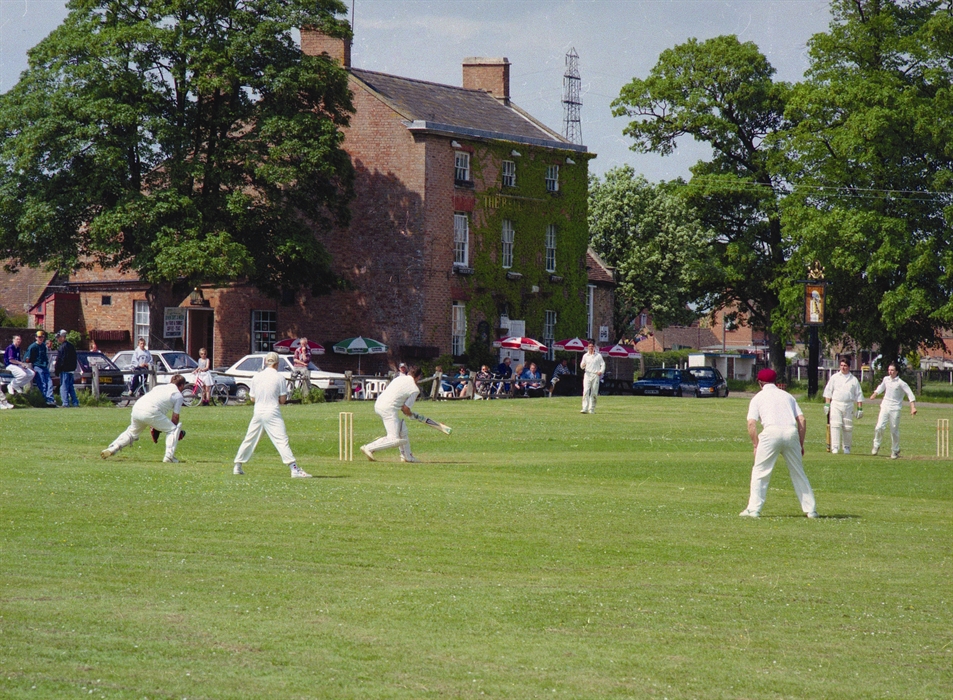
Frampton, at the close of the 18th century, was home to a population numbering roughly 500 to 700 souls; though by the 1830s this had crept nearer to 800, thanks in no small part to improved trade and the quiet expansion of agricultural employment. Its heart, lay in Rosamund’s Green, an elegant mile-long village green, reputed to be the longest village green in England.
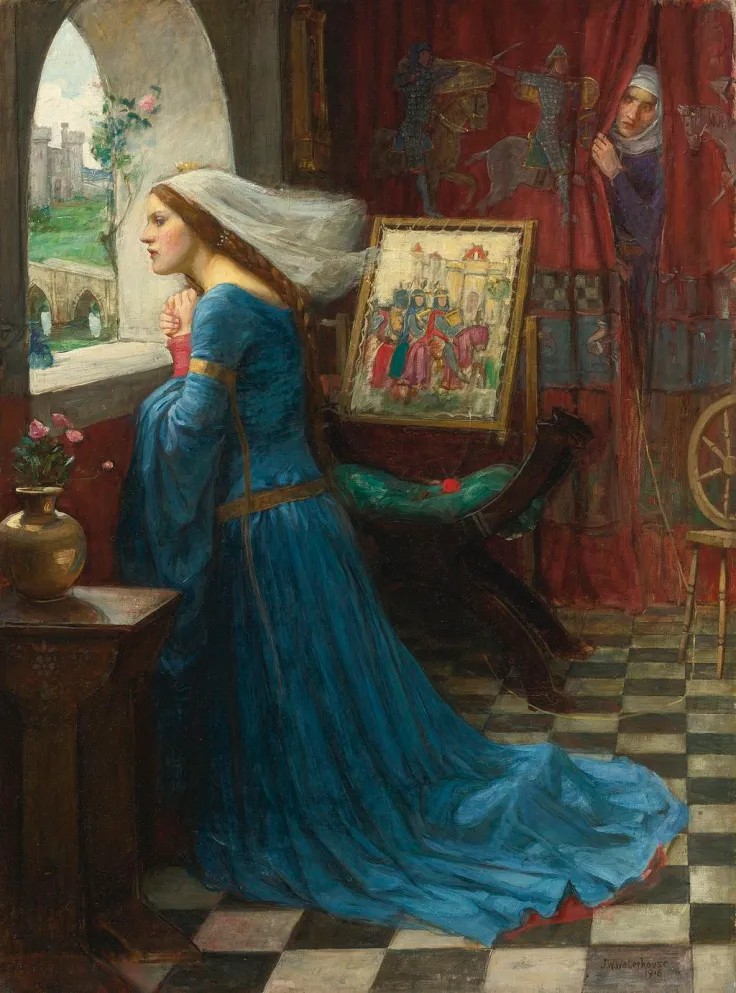
One might be tempted to assume that Rosamund’s Green was christened with the sober precision of parish record or deed of land, but how disappointingly practical that would be for a village of such agreeable imagination. No, it is said, whispered rather more charmingly than confirmed, that the green in Frampton-on-Severn owes its name to Rosamund Clifford, the famed “Fair Rosamund”, whose beauty once so captivated Henry II that history and legend have long since ceased to agree upon the facts. Whether she ever set foot in Gloucestershire is doubtful. Yet the enduring presence of the Clifford family in the locality has ensured that her name, if not her person, was most elegantly embroidered into its landscape. Thus, as is so often the case in polite society, a pleasing story has quite outlived a verifiable truth.
Encircling the green stood a most telling arrangement of society. The larger, more gracious houses – symmetrical, sash-windowed, and set behind neat hedges – were occupied by minor gentry, prosperous yeoman farmers, and retired merchants who had, perhaps, made their fortunes in Gloucester or Bristol before seeking rural respectability. It was not uncommon to find a widowed gentlewoman with a modest income residing beside a corn trader or a lawyer of middling success. These households kept servants, often one or two maids, perhaps a groom, and prided themselves on propriety.
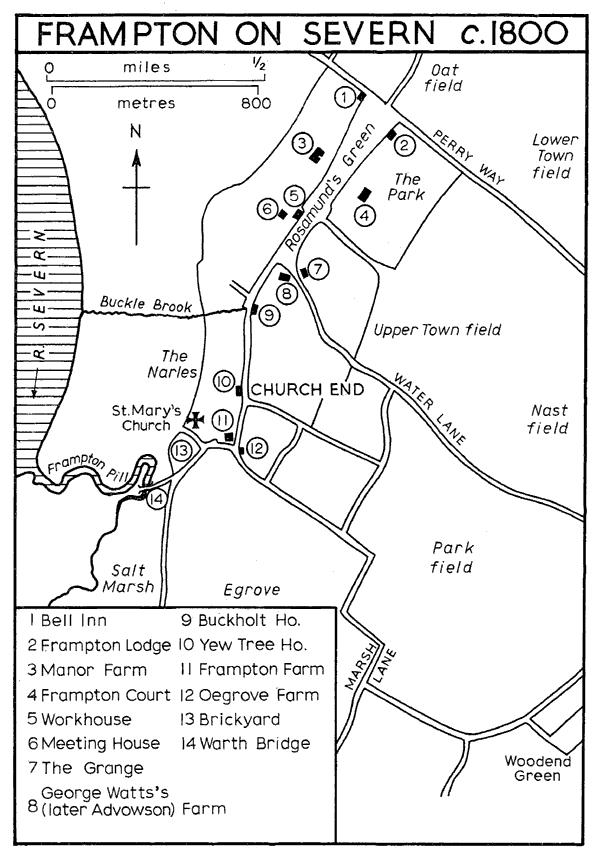
Further along, cottages housed labourers and artisans: blacksmiths, wheelwrights, and the indispensable thatchers who kept roofs sound against the damp English climate.
The modest parish poorhouse at Frampton-on-Severn, part of the wider system of poor relief before the great reforms of 1834, provided shelter and basic sustenance to those unable to support themselves, though in exchange they were set to work under strict supervision. Conditions were plain and often spartan, with an emphasis on discipline and self-sufficiency rather than comfort. One hears it was less a place of refuge than of necessity, where poverty was managed as much as it was relieved.
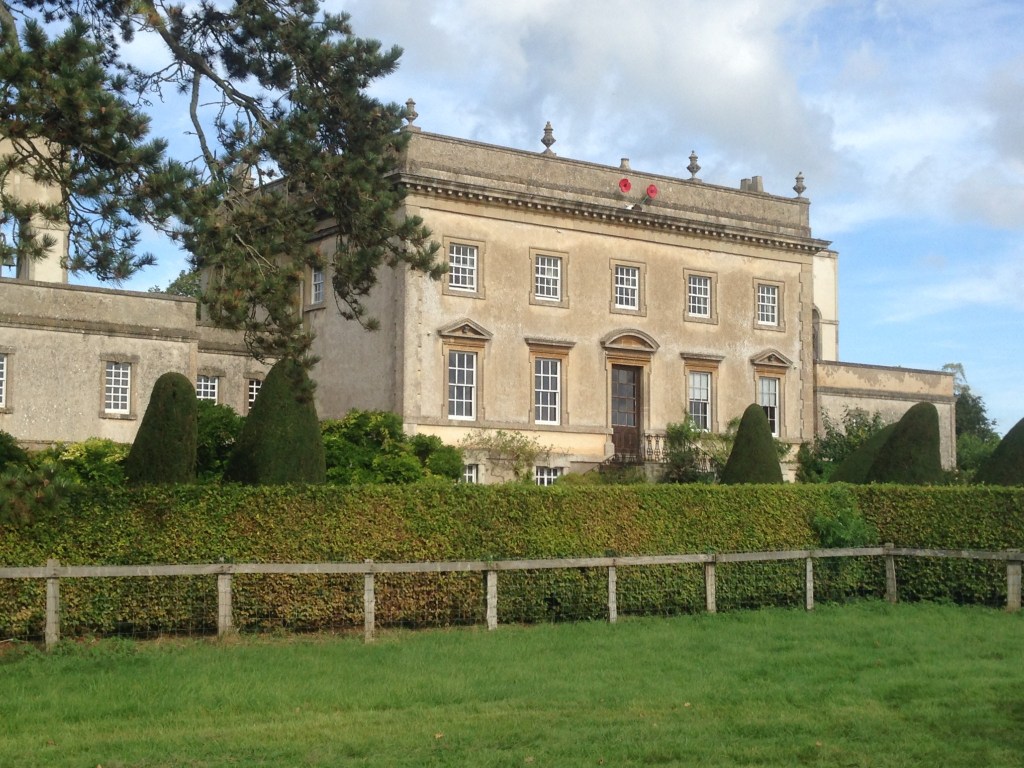
Presiding above all, with quiet authority, was the Clifford family at Frampton Court. The estate was briefly in the hands of the Clutterbuck family before returning to the Cliffords via Royal Consent in 1801. The estate shaped the rhythm of life in Frampton. Rents were set, land was leased, disputes were mediated or, at times, exacerbated according to their inclination. Employment for dozens depended upon their decisions, from gardeners and gamekeepers to household servants and farm tenants.
Meanwhile, the rhythms of village life continued with admirable persistence. The farm servant rose before first light, his duties dictated by the season: ploughing and sowing in spring, haymaking under the relentless summer sun, and threshing grain as autumn gave way to chill. Dairymaids churned butter with a diligence that belied the simplicity of the task, while shepherds watched over flocks with patience born of necessity. Labourers mended hedges, dug ditches, and tended livestock, their hands calloused and their fortunes uncertain. Wages were low, perhaps 8 to 10 shillings a week. A poor harvest, like in the devastating Year Without a Summer in 1816, could mean not merely hardship, but hunger.
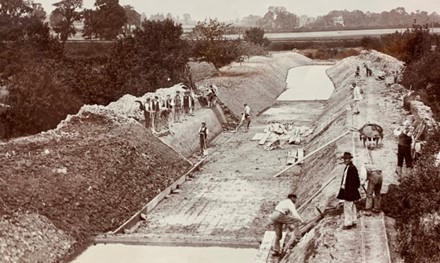
Yet Frampton was not untouched by progress. The Gloucester and Sharpness Canal, begun in the 1790s and largely completed by 1827, was designed to spare vessels the dangerous navigation of the River Severn, whose tides and sandbanks had claimed many ships. With the canal came trade: timber, coal, grain – and bargemen.
Rough in speech yet rich in anecdote, bargemen, with their stories of distant ports, introduced ideas, and occasionally vices, that unsettled the more conservative parishoners. Tales circulated of wagers lost in the candlelit inn, of contraband quietly exchanged under cover of darkness.
Bargemen lodged where they could, though many favoured the village’s Bell Inn. The inn, modest yet lively, played host to travellers, canal workers, and the occasional gentleman journeying between Gloucester and the Severn ports. Within its walls, one might hear songs, arguments, and stories of distant places. Some visitors were respectable; others decidedly less so.
Yet not all stories of boatmen were cause for censure. Some spoke of quiet heroism, of goods delivered through winter floods, and of families supported by long, lonely journeys along the water.
As for amusements, Frampton possessed a quiet ingenuity. Cricket matches upon Rosamund’s Green drew spirited crowds, inspiring fierce loyalties and louder arguments, where wagers were placed with alarming enthusiasm. Fêtes at St Mary the Virgin and harvest suppers offered more respectable diversions, though even these could not escape intrigue.
Village folklore has it that at a harvest supper in the year 1819, a competition was held for the finest plum pudding in Frampton. Victory was awarded to a woman of respectable standing, whose recipe was praised for its richness and subtle spice.
Alas, triumph was short-lived. A rival, no less determined, publicly accused her of having obtained the recipe through deceit, claiming it had been shared in confidence some weeks prior. Voices were raised, loyalties declared, and the vicar himself was forced to intervene when matters threatened to disrupt the evening entirely. One cannot help but admire the seriousness with which such matters were pursued.
Yet amid such levity, darker realities persisted. The closing years of the 18th century brought poor harvests, particularly in the 1790s, when high grain prices strained even modest households. There were whispers of hunger in lean years, and with inclosure of small holdings into larger fenced claimed land, families were forced to seek work beyond the parish. Children were set to labour before their time. Even the canal, for all its promise, brought danger: accidents, drowning, and the ever present risk of lives lived too close to uncertainty.
Disease, too, cast its shadow. Fevers, likely typhus, tuberculosis or influenza, passed through the village in intermittent waves. While Frampton avoided the devastating cholera outbreaks that would later afflict larger towns in the 1830s, there were seasons when mortality rose, and families mourned quietly behind closed doors. Children were especially vulnerable. Parish records from the era reveal a sobering frequency of infant burials. A reminder that even in this seemingly tranquil place, life was precarious.
And yet, always, there was resilience. For every tale of despair, there existed another of quiet endurance. The Green remained a place of gathering; cricket matches continued with unabated enthusiasm; neighbours extended aid where they could. Even the canal, with all its disruptions, brought opportunity alongside risk.
Through it all, Frampton endured with a peculiar grace. Its lanes echoed with laughter as often as lament. Its people as capable of kindness as they were of curiosity. For every scandal that stirred the village, there was a quiet act of generosity to balance it – though naturally such deeds are far less discussed.
Thus, my dear reader, Frampton-on-Severn reveals itself not as a mere pastoral idyll, but as a society in miniature, complete with hierarchy, hardship, ambition, and, of course, scandal. A place where the sweep of history touched lightly, yet left its mark in every hedgerow and hearth.
And should you ever doubt that even the smallest village may contain a world entire, I need only remind you: in Frampton, a pudding was never just a pudding… and a whisper was never merely a whisper.
 Regency Relatives
Comments, insights, and gentle corrections welcome.