You don’t expect to stumble upon a “king” when rummaging through a modest Gloucestershire lineage, but there he was, sat rather awkwardly among ploughmen and labourers, bearing a name that seemed to have ideas above its place. What can be gathered of him comes in scraps: parish notes half-muttered, records that shift about like they’ve something to hide, and just enough oddity to make one suspicious. On the face of it, his was an ordinary country life. But the deeper I dig, the less ordinary it appears, and the more it feels as though the truth is playing a quiet game of avoidance.
Let me begin with the first of these relations of mine from the Regency years—a fellow who very nearly had me casting aside good sense altogether and laying claim to Windsor Castle as if it were mine by right.
My five-times great-grandfather.
A Gloucestershire labourer, plain and ordinary by all outward measure. A man with no claim to rank or title but bearing a name that suggests otherwise:
King Charles.
You don’t come across a name like that in a dusty family tree and carry on as if nothing’s happened. My mind, of course, went off at once; petty squabbles over inheritance, a miraculous rise in station, and myself turning down the burdens of royalty from the comfort of an absurdly large drawing room, tea in hand.
This oddly named fellow turns up in the sprawling Charles family of Frampton-on-Severn; a family so full of Williams, Johns, and Anns that you start to think no one fancied trying anything new at the font. And then, just as you’re getting comfortable with the pattern, up he pops: King Charles.
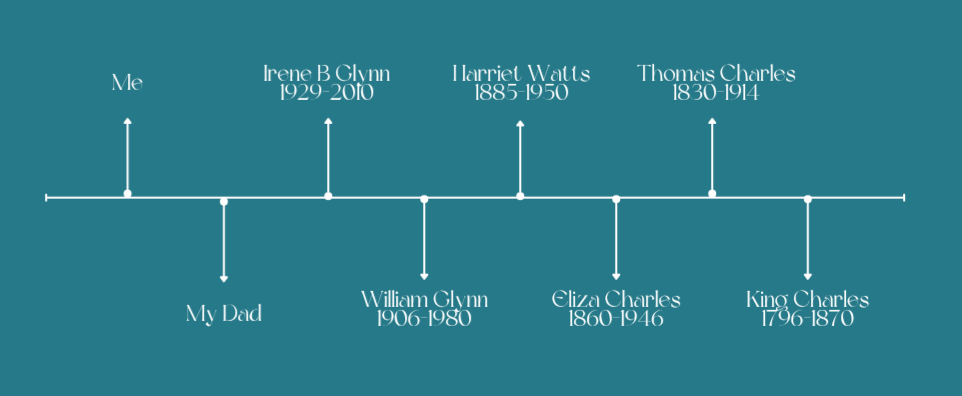
Now, before anyone starts eyeing up a coronation gown, this King had no royal blood to speak of. He was baptised on 28 February 1796 in Frampton-on-Severn, Gloucestershire, alongside his twin sister Elizabeth. He was the son of John Charles and Ann Roper, and one of sixteen children. Sixteen. You can almost hear the din from here. As was sadly common at the time, not all of them made it past infancy. In the early 19th century, nearly one in three children died before the age of five, most often from infection. It’s a sharp reminder that behind those neat parish entries sits a far messier, harsher reality.
At some point between his baptism and his marriage, King seems to have moved over to the neighbouring parish of Eastington, which in 1801 had a population of about 120 souls. Unfortunately, this lands us squarely in the pre-census years, when headcounts were patchy and details thinner still, leaving us with the genealogical equivalent of a locked bureau and no key to open it.
In May 1822, King married Hester Grafton at St Mary the Virgin, Frampton-on-Severn. Hester (also charmingly recorded as Esther… and occasionally Easter, which suggests either clerical confusion or a most adaptable woman) was born in Oswestry, Shropshire, though she appears in Frampton at the time of the banns. King, meanwhile, is noted to still be residing in the parish of Eastington.
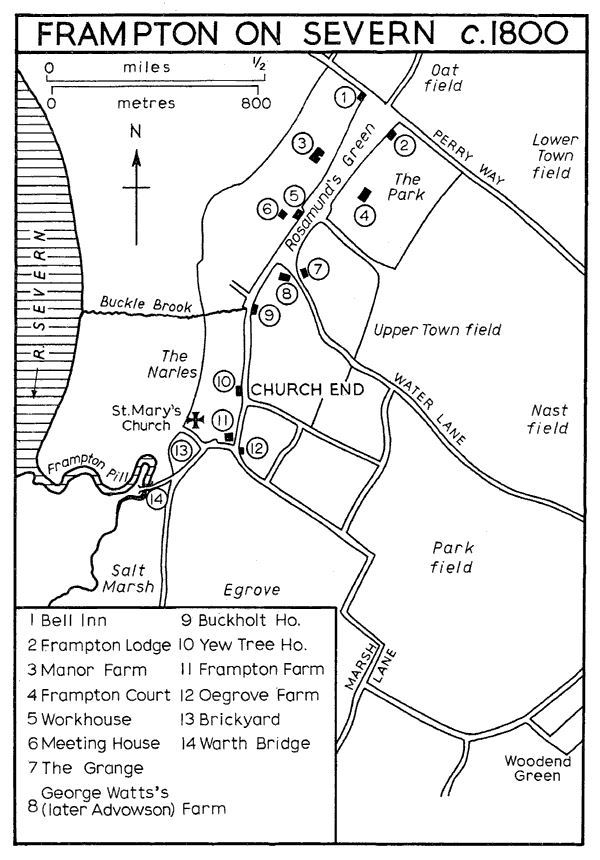
How they ended up meeting is anyone’s guess. The Bell Inn feels as likely a spot as any. Those village inns were really the great levellers of rural England. And let’s be honest, romance has kicked off in far worse venues than a pub with a bit of history and a decent ale.
And then, dear reader, matters become delightfully awkward.
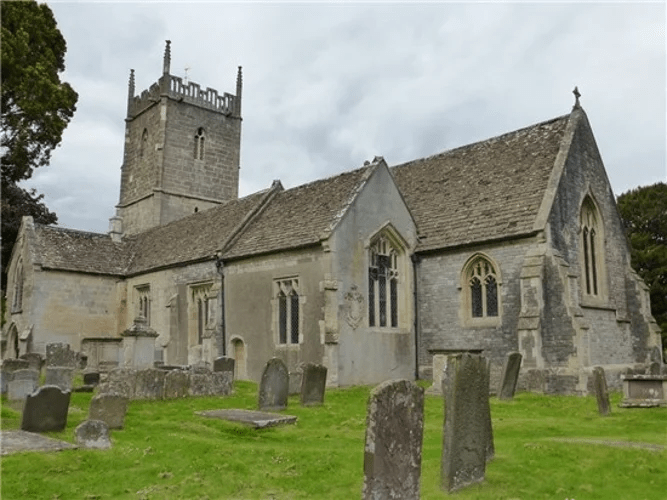
On 9 July that same year, their first child, Caroline, was baptised in Frampton. You don’t really need a scandal sheet to do the sums. Tight timeline? Early arrival? Or just the sort of rural reality where propriety bends quietly to practicality? I’ll let you draw your own conclusions—and raise your own eyebrow accordingly.
At that time, King is listed as a “servant”, a wonderfully elastic term that could mean anything from respectable indoor employment to “works hard, sleeps little, and gets on with it.” Whether he was attached to a manor household or, as Frampton’s landscape would suggest, working as a farm servant is impossible to pin down.
Farm servants, as a rule, were usually young, unmarried labourers taken on at annual or half-yearly hiring fairs. They lived on the farms, were fed and lodged, and earned their keep through sheer physical graft: milking, hedging, harvesting; often from first light until well after it had stopped being reasonable. It wasn’t glamorous work, but it kept the countryside running, which is more than can be said for many grander occupations.
By 1824, when their second child Elizabeth was baptised, King is recorded simply as a labourer. I’m tempted to see this as a shift towards something steadier, if not exactly a leap into glamour. I like to imagine he reached the same conclusion himself – that marriage and fatherhood required a bit more permanence than seasonal work could offer, or at the very least somewhere a man could keep the same bed for more than a few months at a time.
Frampton-on-Severn itself was no sleepy backwater. The village was shaped by agriculture, river trade, and the ambitious construction of the Gloucester & Sharpness Canal between 1794 and 1827. A long village green sat at its heart, ringed with cottages and farms. I can quite easily picture King somewhere in that landscape. Mud on boots, canal works in progress, life firmly grounded in the practicalities of survival.
Together, King and Hester had six children: Caroline, Elizabeth, Harriet, George, Thomas, and Eliza (baptised 1833). A respectable brood, steadily growing alongside an England in flux.
But, as all good stories demand, joy does not linger unchallenged.
In January 1834, Hester was buried at the age of just 30. No cause of death is recorded, though tuberculosis, then commonly called consumption or phthisis, was widespread in rural communities. I cannot help but pause here, however briefly, at the fragility of it all: a bustling household reduced, in a single parish entry, to silence.
In April 1833, before the burial of Hester, banns appear for a King Charles and an Elizabeth Meprade in the Frampton parish records. No marriage follows in the register. No explanation is given. A clerical error? A different King entirely? Or a fleeting entanglement that never reached the altar? The parish records, maddeningly, decline to elaborate. What we do know is that by 11 October 1835, King had married again, this time to Ann Davis, again at St Mary the Virgin. Witnesses included local police constable John Browning and his wife Harriet, suggesting a ceremony of respectable standing.
With Ann, King had five more children: Emma, William, Sophia, Martha, and Edwin. The household, already substantial, expanded yet further, because apparently moderation was not a guiding principle in Regency England.
And so, we glide most gracefully into the Victorian era… a time of great occasion and even greater enthusiasm for all things royal.
In a village such as Frampton, ever loyal to the Crown, I can imagine the family joining their neighbours on that famously bright June day in 1838, as the coronation of Queen Victoria was celebrated with due merriment. The village green would surely have been alive with delight: bunting fluttering prettily overhead, children (and perhaps a few spirited adults) tumbling through sack races, the occasional donkey offering rides to the adventurous, and long tables laid out with a feast fit for the occasion. And presiding over it all, the bells of St Mary’s Church ringing out in fine voice, ensuring that the entire village, the Charles family included, was swept up in the jubilant spirit of the day.
With the dawn of the Victorian era came not only grand fashions and increasingly exacting social graces, but also a new sort of curiosity about the country itself. It seemed everyone wanted answers: how many people were actually living in all these towns and cities, and how on earth were they all meant to be fed, housed, and kept in order?
And so, with characteristic Victorian thoroughness, the population began to be counted properly with the introduction of the Census. The 1841 Census finally offered more of a glimpse into the family’s domestic arrangement: King, Ann, and several children still at home in Frampton-on-Severn, though frustratingly without a recorded address. Caroline, Elizabeth, and Harriet had already begun their own lives. Elizabeth, notably, surfaces in Birmingham – the “city of a thousand trades” – where she marries Thomas Nicholls, himself a labourer. One does love a matching of occupational energy.
Between 1841 and 1849, the family made their way to Eastington, presumably in pursuit of work, though one cannot help but raise an eyebrow and wonder whether this was a bold, forward-thinking decision or simply necessity dressed up in its Sunday best. For families of this sort, after all, it was rarely sentiment that dictated one’s address, but the far less romantic matter of employment.
Eastington, with its growing industry and whispers of opportunity, may well have appeared a most promising prospect compared to Frampton’s quieter offerings. Or perhaps the move was less ambitious than it sounds – guided by familiar faces, distant relations, or the reassuring presence of those who had already made the journey. I envisage not a dramatic exodus, but rather a gentle, resigned procession: carts creaking under modest possessions, children bundled together, and the distinct understanding that this was simply how life unfolded, whether one approved of it or not.
But by 1850, any fragile sense of stability had rather unravelled. Tragedy, never known for its sense of timing, struck again, and Ann died. King was left not only with grief, but also with the considerably more immediate problem of keeping a household of children fed, clothed, and more or less alive, as they stubbornly continued to require.
I can’t help but wonder how quickly life must have rearranged itself. Did the older children step into responsibility with quiet resolve, or just the weary acceptance that there wasn’t really any alternative? Was there even time for proper mourning, or did necessity, as it so often does, simply sweep in and tidy grief away in favour of whatever had to be done next? And in those rare, quieter moments, if such luxuries existed, what did King make of it all? A life so lacking in permanence, and yet so demanding of resilience, is hardly the sort one chooses.
By 1851, I find the family at the wonderfully named “Muddles Hole” in Eastington, a name that does rather invite questions of its own. I can only hope it was more pleasant in practice than it sounds on paper, though the records, as ever, are frustratingly unhelpful on that point. King is listed as a labourer again, living with Eliza, William, Sophia, Martha, and young Edwin, while the older children have already gone their separate ways into service, marriage, or work in industry, each one following whatever path necessity happened to lay in front of them.
Muddles Hole itself sat in a parish that was changing in ways that were hard to miss, even if no one was making a great song and dance about it. Eastington, once comfortably agricultural, was beginning to feel the pull of industry: cloth mills, trade, and all the steady progress that tends to arrive whether a village is ready or not. Brick cottages started appearing with almost cheerful determination along Bath Street and Middle Street. As for King, I can’t quite pin him down in the middle of it all. Was he labouring on the building of those new cottages, helping to shape the very changes creeping through the parish? Or was he still drawn, as so many were, to the more familiar rhythm of agricultural work? The records don’t say, and of course they never do when you most want them to.
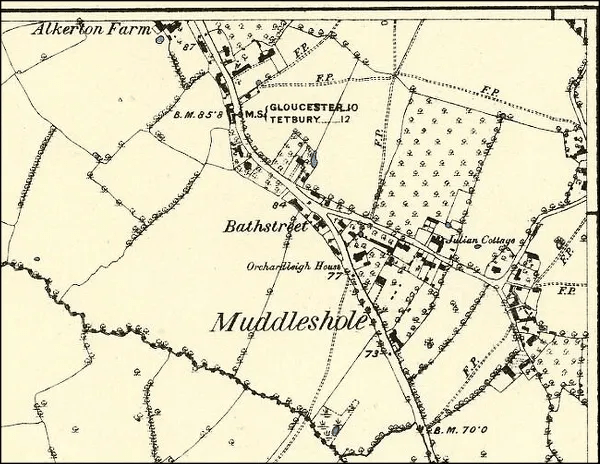
One can easily picture the household settling into this shifting landscape: children growing up to the steady hum of industry, neighbours coming and going with the rhythms of mill work, and daily life shaped as much by factory bells as by the turning of the seasons. Whether their home was one of those newly built cottages or something rather older and less obliging, it was almost certainly practical above all else – charm being, as ever, an optional extra.
Daily life in Muddles Hole would have required no small measure of diligence. Early mornings, shared burdens, children gradually joining the workforce – hardly the stuff of poetry, and yet undeniably the substance of survival. There is, however, something quietly admirable in it all: a family adjusting, enduring, and carrying on in a world that seemed determined to keep shifting beneath their feet.
By 1861, King appears once more in Frampton-on-Severn, settled along Frampton Street and still labouring away. Consistent if nothing else, which is more than can be said for his shifting geography. With him are William, Martha, and young Edwin, the household continuing in its familiar rhythm of work, duty, and the occasional moment to sit down, one hopes.
His return does invite speculation. Was it the pull of familiarity – old acquaintances, lingering family ties, or simply the comfort of knowing which road led where? Or did necessity, ever persuasive and rarely subtle, guide him back to where work could be secured? Perhaps Eastington had simply exhausted its usefulness, as places so often do when one needs them most.
Or… dare one indulge a slightly more romantic notion… was there a quiet desire to return to the landscape of his youth? A sense, however faint, that one’s story ought to end where it first began? It is a tempting thought, though one suspects practicality had the louder voice.
Whatever the reason, he finds himself once again woven into the fabric of Frampton, the same village that had witnessed his beginnings, and, as it would turn out, would see his end. For in 1870, his story reaches its conclusion. He died and was buried in Frampton-on-Severn. No grand flourish, no dramatic finale, but a quiet return to the soil that had, it seems, never entirely released its hold on him. No monument of note, no legend etched in stone, unlike his Royal namesake, just a life lived steadily, persistently, and with more endurance than it is ever given credit for.
You might assume, dear reader, that this tale ends there.
After all this careful tracing, record-sifting, and eyebrow-raising domestic chronology, I discovered something most unexpected:
This King Charles… is not the only one.
In fact, I appear to have stumbled headfirst into a far larger King Charles rabbit hole than any respectable genealogist should encounter alone.
And so, I invite you to join me next time – as I attempt to untangle exactly which King Charles I have truly found… and how scandalously deep this particular family mystery goes.

 Regency Relatives
Comments, insights, and gentle corrections welcome.