
Buried within the parish registers of Burton Dassett is a story that begins with sheep farming, village life and a large Warwickshire family, before unfolding into something far more complicated. What first appeared to be the fairly ordinary life of my five-times great grandfather, Francis Anderton, slowly became a tale of devastating loss, unanswered questions, remarriage, migration, and survival during one of the most transformative periods in English history. Along the way there are missing records, possible outbreaks of disease, a widow from Coventry, and a tenant farmer who eventually exchanged the Dassett Hills for the smoke and noise of industrial Birmingham. As ever with family history, the most interesting parts are often the things the records never quite explain.
There are some ancestors who arrive in the records with a sort of confidence about them. They leave wills, own suspiciously large amounts of property, or insist upon being mentioned in newspapers for reasons that are usually either impressive or deeply embarrassing (luckily for me those ancestors are not of the Regency era, so those skeletons shall firmly remain locked in the closet). And then there are ancestors like my five-times great grandfather, Francis Anderton, who reveal themselves slowly through fragments.
I first found Francis in the parish registers of Burton Dassett, baptised at All Saints Church on 20 November 1774. He was the son of Francis Anderton and Mary Bishop, and one of thirteen children, which immediately suggests a household that must have been busy, noisy, muddy and perpetually in need of bread.
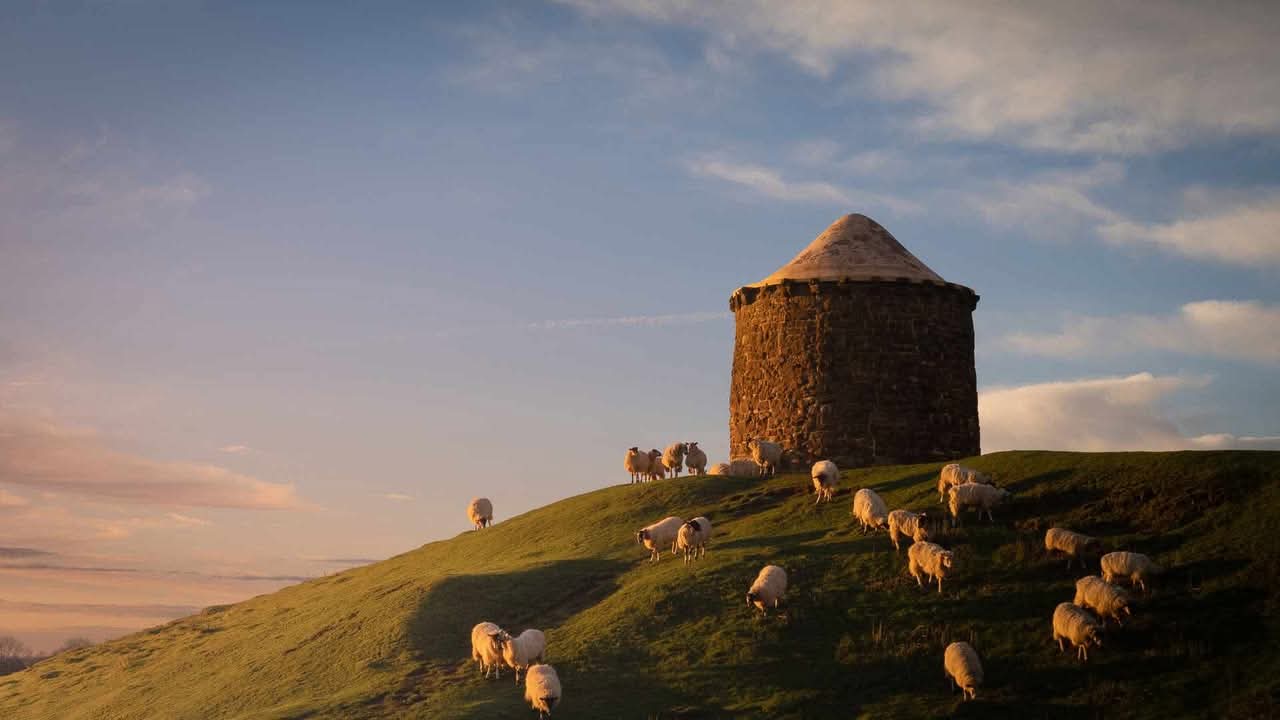
Burton Dassett in the late eighteenth century was deeply agricultural. The hills still dominate the landscape now, and standing there today it is surprisingly easy to imagine the world Francis knew. Sheep moving across the slopes. Narrow lanes cut through fields. Smoke from cottage chimneys drifting across the valley. Lives measured by weather, harvests, and whether the family managed to get through another winter intact.


This was not yet industrial England. Birmingham existed, certainly, but the enormous urban Midlands that would emerge during Francis’s lifetime had not yet fully arrived. Most families in villages like Burton Dassett lived close to where they were born, married people they had known for years, and depended heavily on neighbours and kin networks. The parish church stood at the centre of village life, quietly recording baptisms, marriages and burials while rarely pausing to mention the emotions attached to any of them.
By the late 1790s, Francis appears in the Land Tax records as a tenant farmer on land owned by George Nugent-Temple-Grenville, the first Marquis of Buckingham. I find this detail fascinating because it places Francis very clearly within the structure of Georgian rural society.

The Temple-Grenville family had longstanding connections to Burton Dassett, before the seat of their peerage moved to Stowe in Buckinghamshire. Their presence still lingered heavily over the village landscape, however, and the family maintained their land in the area. Inside All Saints Church are grand tombs linked to the family, monuments to status and permanence. Meanwhile, men like Francis actually worked their land itself. Tenant farming occupied that awkward middle ground between security and uncertainty. A tenant farmer could be skilled, respected and reasonably established while still remaining vulnerable to poor harvests, changing rents or economic downturns entirely beyond his control.
Francis likely farmed sheep around the Dassett Hills, which suited the upland landscape. I suspect the reality involved considerably more mud and exhaustion than modern countryside paintings like to admit. Georgian farming was physically relentless work. Animals needed tending in all weather, hedges required repair, fields had to be maintained, and every season carried risk.


And yet there must also have been familiarity and rhythm in that life. The same hills. The same church bells. The same neighbouring families appearing repeatedly through the parish registers. A world where everybody knew exactly who your parents were and probably several other pieces of your business besides.
On Boxing Day 1799, Francis married Rosanna Willson at All Saints Church. Rosanna was the daughter of Job Willson and Mary Mayo, though Job had previously been widowed, meaning Rosanna grew up within a blended family structure that probably involved the usual complications of inheritance, loyalties and household dynamics that families have always somehow managed to produce.

Between 1800 and 1824, Francis and Rosanna had fifteen children together. Fifteen!
The parish registers steadily record the growth of the family: Mary Ann, born in October 1800; Francis in 1802; Joseph in 1803; Rose Anna in January 1805; Ann in 1806; Henry in 1808; John in May 1810; Sarah in 1811; Charlotte in 1812; Elizabeth in 1814; Emma in 1817; Matilda in 1819; another John in 1820; Eleanor in 1821; and finally Amelia in 1824.
At first glance, the parish registers almost create the illusion of stability. Baptism follows baptism in calm succession, each new child carefully entered into the life of the village. But those same registers also remind us how fragile family life could be in the early nineteenth century. Their son John, born in 1810, died in infancy, a loss that would have been heartbreakingly familiar to families of the period. Infant mortality remained tragically common in Georgian and Regency England, long before sanitation, vaccination and medical understanding began to improve survival rates.
Francis and Rosanna later gave another son the name John, something commonly done when a child had died young, particularly when names carried family or emotional significance. Practical though the custom may have been, there is still something quietly moving about it. The first John survives now only in a brief parish entry, but his name itself was not entirely surrendered.
For years, the registers had marked the ordinary milestones of family life: baptisms, growing children, and the steady expansion of the Anderton household. But by the autumn of 1826, the tone of those entries changes abruptly. On 27 September, Francis’s son Joseph died. Then, only weeks later, on 9 November, his wife Rosanna died, followed the very next day by daughter Sarah. Both Rosanna and Sarah were buried together on 13 November. The losses did not stop there. Son John died on 1 December, daughter Eleanor followed on 5 December, and finally Matilda died on 9 January 1827.

Few records survive to explain precisely what happened within the Anderton household, but the pattern strongly suggests an infectious illness moving rapidly through the family. Rural England in the 1820s remained deeply vulnerable to outbreaks of disease. Smallpox, typhus, scarlet fever, dysentery, measles and tuberculosis all circulated widely, particularly where large families lived in close quarters and medical treatment remained limited.
Medical understanding at the time was still painfully rudimentary. Germ theory had not yet been discovered, sanitation was poor, and many illnesses spread unchecked through households and villages. A family already weakened by grief, poor nutrition, exhaustion or harsh winters could become especially vulnerable once sickness entered the home.
For Francis, the winter of 1826 must have been catastrophic beyond modern comprehension. To bury a wife and five children within such a short span of time would have altered the entire structure of family life, emotionally and practically. I also find myself wondering about the quieter realities hidden behind those burial entries. Who cared for the younger children while Rosanna herself was dying? Did neighbours step in to help? Was the wider village also struggling with illness at the same time? How does a man continue functioning after carrying so much grief in only a few months?
The records, characteristically, remain silent.
In the years that followed, life appears to have slowly begun reshaping itself around what remained. On 3 January 1830, Francis married Catherine Chaplain, née Hill, at Holy Trinity Church in Coventry.
It is here that the story begins to extend beyond the familiar landscape of Burton Dassett and into a rather different world.
Catherine had been born in Coventry in 1801, the daughter of John Hill and Elizabeth Brooks. She was baptised at St John the Baptist Church and seems to have spent her early life within the busy commercial world of Coventry rather than the farming communities of southern Warwickshire. This immediately intrigues me because Coventry and Burton Dassett were very different environments. Coventry was a city shaped by weaving and textile manufacture, full of tradespeople, workshops and urban industry. Catherine’s childhood likely involved crowded streets, commerce and craft trades rather than sheep farming and open hillsides.

Before marrying Francis, Catherine had already been married once before to John Chaplain, also at Holy Trinity Church. Together they had three children, though one child died aged three. The marriage record for Catherine and Francis describes her as a widow, meaning John Chaplain had died sometime before 1830. Frustratingly, I have not yet been able to identify with certainty what became of him. Did he die in Coventry? Move elsewhere for work? Was his burial recorded under an unexpected spelling variation? Or has the record simply vanished into the abyss where family history occasionally likes to hide one crucial piece of evidence just to maintain psychological dominance over researchers?
What we can say with confidence is that both Francis and Catherine entered the marriage carrying grief of their own. I think this changes the emotional texture of the story quite considerably. It is easy to look at nineteenth-century remarriages and frame them as purely practical arrangements, and practicality certainly mattered enormously. Widowed households needed labour, organisation and childcare. But practicality and affection are not mutually exclusive things. Shared experience, resilience and mutual understanding may have mattered deeply too.
There is also the question of how Francis and Catherine met in the first place. Was Francis already travelling to Coventry for agricultural business? Did mutual family connections link the households? Had he already begun moving beyond village life after the losses of 1826? Or was the meeting entirely ordinary in a way the records no longer allow us to reconstruct?
By the time they married, Francis was in his mid-fifties while Catherine was around twenty-nine. The age difference stands out to modern eyes, though it was not especially unusual in second marriages involving widowers with established households. In November 1830, Francis and Catherine welcomed a son, Thomas, born in Coventry. After the losses both had already endured in earlier marriages, one cannot help hoping this period brought at least some sense of renewal and stability to the household. Yet the registers soon darken again. In April 1831, little Thomas died in infancy, only a few months after his birth.
Curiously, the same year Thomas died, Francis and his brother Thomas Anderton appear in records relating to Burton Dassett as qualified jurors. Both men were connected with farming, and their qualification for jury service came through occupying land that contributed to the local Poor Rate. This detail matters more than it might first appear. Jury qualification in the early nineteenth century was tied to property and status, suggesting Francis still held a reasonably established place within the rural community of Burton Dassett. He was not a man disappearing from the countryside through poverty or obvious failure. He remained economically active, connected to the land, and involved in parish civic life.
But, sometime between 1831 and 1838, Francis left Burton Dassett entirely.
By 1838, records place him in Duddeston-cum-Nechells, now within the Aston area of Birmingham, living on Howe Street on the rapidly expanding edge of industrial Birmingham. The contrast between the two places could hardly have been greater. Burton Dassett was a rural agricultural parish of fields, hills and scattered farms. Duddeston, by the late 1830s, was increasingly shaped by canals, workshops, smoke, noise and rows of tightly packed housing built to accommodate Birmingham’s growing population. Why Francis chose to leave after spending most of his life in Burton Dassett is one of the questions that lingers most strongly for me throughout this story.

Economics almost certainly played a role. The decades following the Napoleonic Wars were difficult for many tenant farmers. Agricultural prices fluctuated sharply, rural poverty increased across parts of England, and industrial towns like Birmingham drew workers from surrounding counties with the promise of opportunity and paid employment. Even reasonably established tenant farmers could find themselves vulnerable to changing conditions, rising pressures and uncertain futures. But I cannot help wondering whether the move carried an emotional weight too.
Burton Dassett was not simply the place where Francis had lived and farmed. It was also where Rosanna and five of his children had been buried within the space of only a few months. Every lane, field and church path may have carried memories attached to grief and absence. Perhaps practical necessity alone drove the decision to leave. Or perhaps, after everything that had happened, remaining there became difficult in ways the records could never fully capture.
By the time Francis appears in Birmingham, he was working as a milkman, an occupation that feels surprisingly fitting given his agricultural background. Expanding urban districts still depended heavily upon surrounding rural economies for food supply, and milk sellers formed an important link between countryside production and industrial town life. Francis had not abandoned his farming experience entirely; rather, he seems to have adapted it to a changing world.
The 1841 census places Francis on Heneage Street in Duddeston-cum-Nechells, living with Catherine and their daughters Maria (born in 1832), Catherine (born in 1834) and Fanny (born in 1836). Ten years later, the 1851 census records the family still at 22 Heneage Street, with Francis continuing his work as a milkman. Daughter Maria was employed as a bonnet maker, a small but telling glimpse into the economic realities of working Victorian households, where women’s paid labour often contributed significantly to family survival even when records only briefly acknowledge it.
Francis also appears in the 1852 edition of Slater’s Directory of Birmingham as a milk seller at 22 Heneage Street. I have always found trade directories oddly moving sources. Parish registers tend to record people at moments of ceremony, transition or loss, but directories briefly place them within the ordinary commercial life of a city. For a moment, Francis steps out of the shadows of baptisms and burials and simply becomes a man running a business in Birmingham.


When Francis died in 1856 on Howe Street and was buried on 3 April at St Matthew’s Church, he had lived through one of the most transformative periods in English history. Born in 1774 during the reign of George III, he entered a world before railways, before large-scale industrialisation had reshaped the Midlands, and before Birmingham had become one of Britain’s great manufacturing centres. By the end of his life, the country around him had altered dramatically.
And perhaps that is why I am interested in the life of Francis Anderton. Not because he was famous, wealthy, or connected to some hidden aristocratic scandal, sadly. But because his story feels profoundly human. It is the story of a tenant farmer navigating enormous economic and social change while repeatedly rebuilding life after loss. The records leave only fragments: baptisms, tax lists, jury qualifications, census entries, burials. Yet when those fragments are carefully placed together, they reveal something surprisingly vivid about endurance, grief, adaptation and the ordinary lives that quietly carried England through an age of transformation.





Leave a Reply