
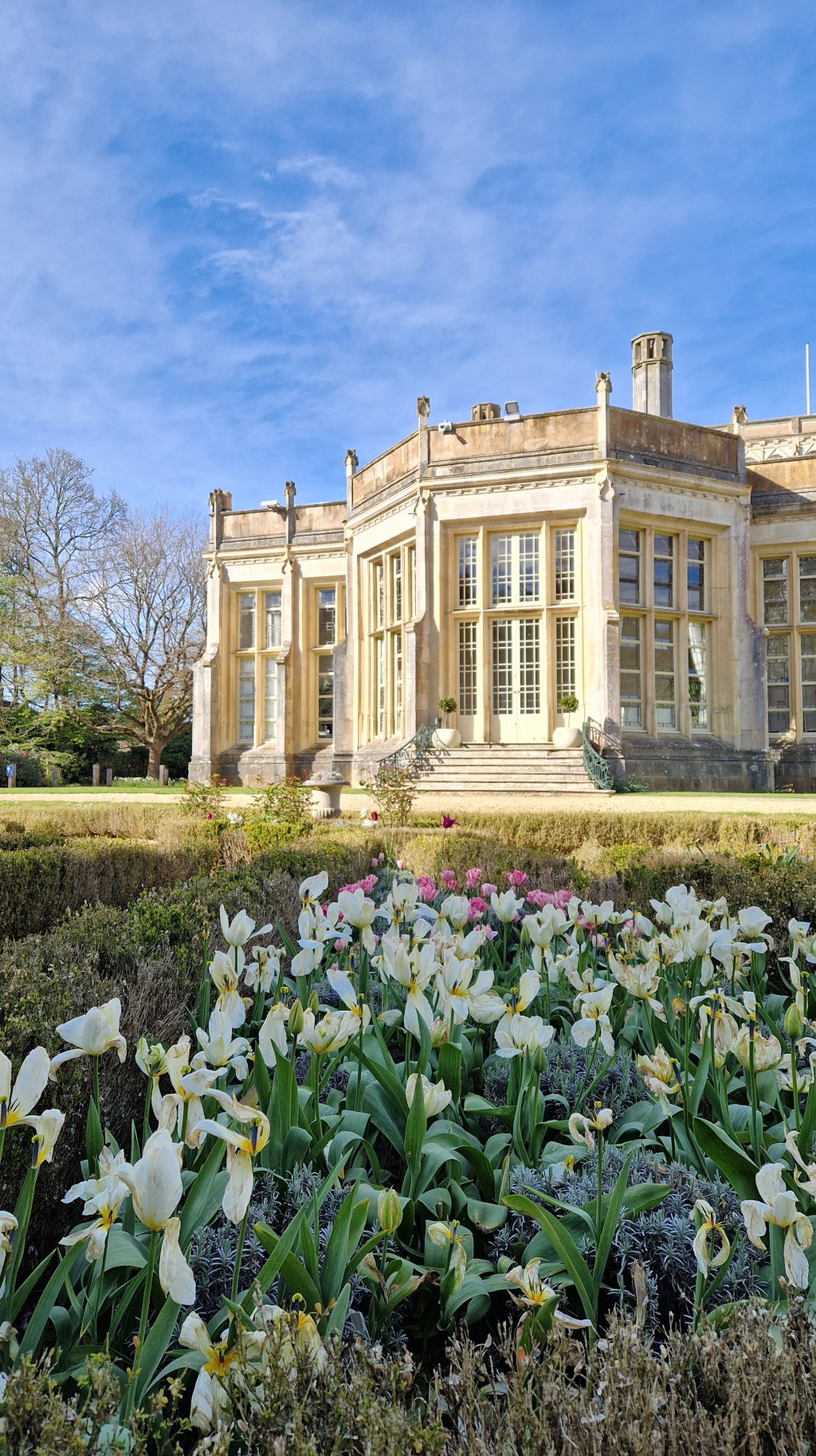
What if one of England’s most captivating cliffside residences is not what it appears to be? Behind its aged, romantic façade lies a most intriguing truth, one shaped not by the medieval world it seems to evoke, but by the ambition, taste, and quiet ingenuity of the 19th century.
Some residences merely exist, while others are designed to captivate at first glance. Highcliffe Castle belongs most decidedly to the latter category. A creation not merely of stone, but of ambition, intellect, and a distinctly 19th-century fascination with the past.
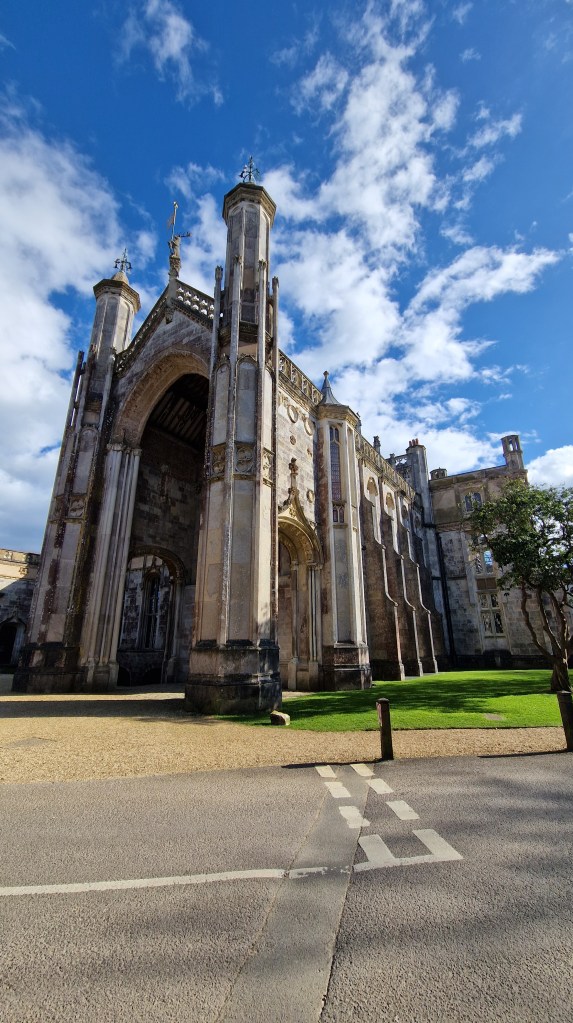
Though its weathered façade may suggest medieval origins, one must not be misled. This is no ancient stronghold, but rather a carefully orchestrated vision brought to life in the early decades of the 19th century; an age when taste, travel, and historical imagination combined to produce something altogether extraordinary.
At the centre of this story stands Charles Stuart, 1st Baron Stuart de Rothesay (1779-1845), a figure whose life was shaped as much by diplomacy as by design.
Lord Stuart was no ordinary aristocrat. His career placed him at the heart of European politics during a period of immense upheaval. Most notably, he served as British ambassador in Paris following the defeat of Napoleon Bonaparte in 1815. In this role, he moved within the highest circles of continental society, witnessing firsthand the restoration of monarchies and the reshaping of Europe after years of war.
In December 1814, Henry Brougham (Lord High Chancellor of Great Britain, 1830-1834) described Stuart as:
He is a plain man, of some prejudices, caring little for politics and of very good practical sense… He has no very violent passions or acute feelings about him, and likes to go quietly on and enjoy himself in his way. He has read a great deal and seen much more, and done, for his standing. more business than any diplomatic man I ever heard of… He has no nonsense in his composition, and is a strictly honorable man, and one over whom nobody will ever acquire the slightest influence…[1]
Paris, with its art, architecture, and reverence for history, offered more than political engagement for Lord Stuart. It provided inspiration. And when he eventually turned his attention to building a residence in England, he did so with a perspective far broader than that of a typical country gentleman.
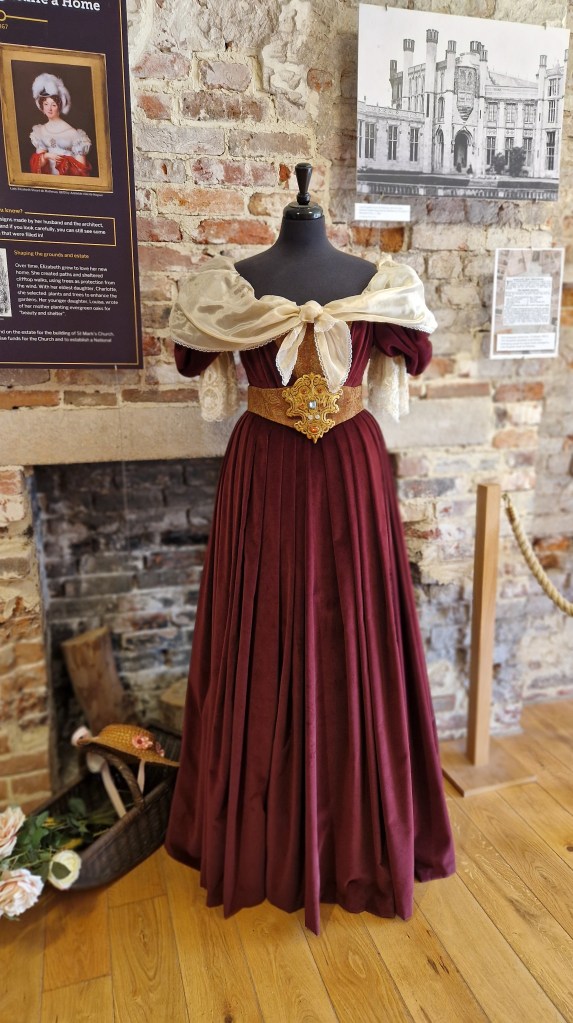
Between 1831 and 1836, Highcliffe Castle was constructed on the Dorset coast, embodying the ideals of the Romantic and Picturesque movements that flourished during this period. Rather than adhering to strict classical symmetry, the design embraced irregularity, texture, and visual drama. Towers, turrets, and varied rooflines were arranged not simply for function, but for effect, ensuring that the castle would command attention from every angle.
Yet its most remarkable feature was not its silhouette, but its substance. In a decision that remains one of the most distinctive aspects of the castle’s history, Lord Stuart sourced large quantities of stone from Normandy. These were not newly quarried materials, but salvaged architectural fragments, richly carved and steeped in history.
Among the most notable sources was Jumièges Abbey, a Benedictine monastery dating back to the 7th century, much of which had fallen into ruin following the French Revolution. From such sites came arches, window tracery, and decorative stonework, all carefully transported across the Channel and incorporated into the fabric of the new building.
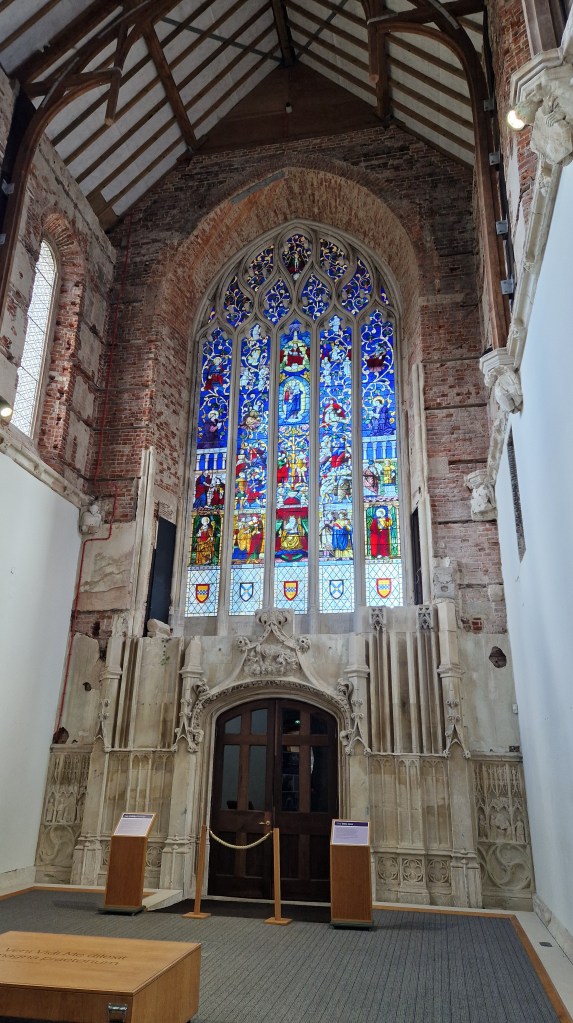
Thus, Highcliffe Castle presents a most intriguing contradiction: a 19th-century residence constructed in part from genuinely medieval materials. It is not an imitation of the past, but a physical assembly of it – an architectural collage that blurs the boundary between authenticity and artistry.
The castle stands as one of the finest surviving examples of the Picturesque style in Britain; a movement that valued harmony with the landscape, historical reference, and a certain emotional resonance in design. Its position atop the cliffs and the dramatic coastal setting enhanced its visual impact, creating a scene that appeared almost painterly in composition. Sea, sky, and stone combined to produce an effect that was as much about atmosphere as architecture.
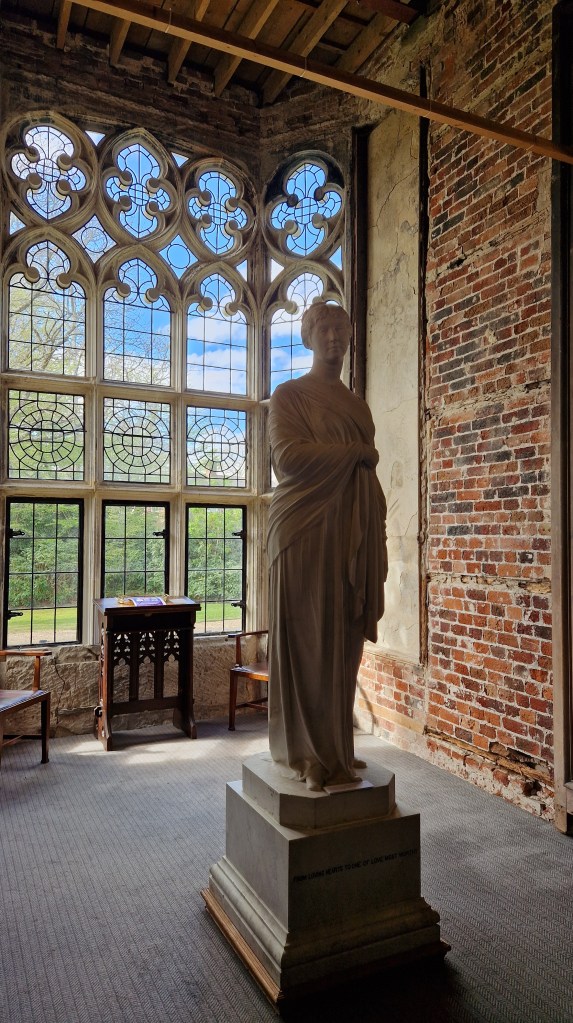
Importantly, Highcliffe Castle is now recognised as a Grade I listed building, reflecting its national significance and the exceptional quality of its design and materials. Although construction towards the end of the Regency period, the castle remains deeply connected to its cultural sensibilities. The early 19th century was an age preoccupied with lineage, taste, and the careful presentation of status. Within its walls, life would have followed the rhythms expected of an elite household: structured days, formal entertaining, and an ever-present awareness of social standing.
Highcliffe offered seclusion and an opportunity to retreat from society while still embodying its ideals. It was, in many ways, a private statement of identity. Lord Stuart did not simply build a home; he constructed a narrative, one that spoke of travel, influence, and a cultivated appreciation for history.
Throughout the mid-19th century, the castle served as a refined country seat, reflecting both the status and sensibilities of its owner. Its interiors, now largely lost to time, were once richly appointed, complementing the grandeur suggested by its exterior.
Here, one imagines a life governed by elegance and order: morning walks along the cliffs, evenings of conversation and correspondence, and the quiet assertion of status that came with such a residence.
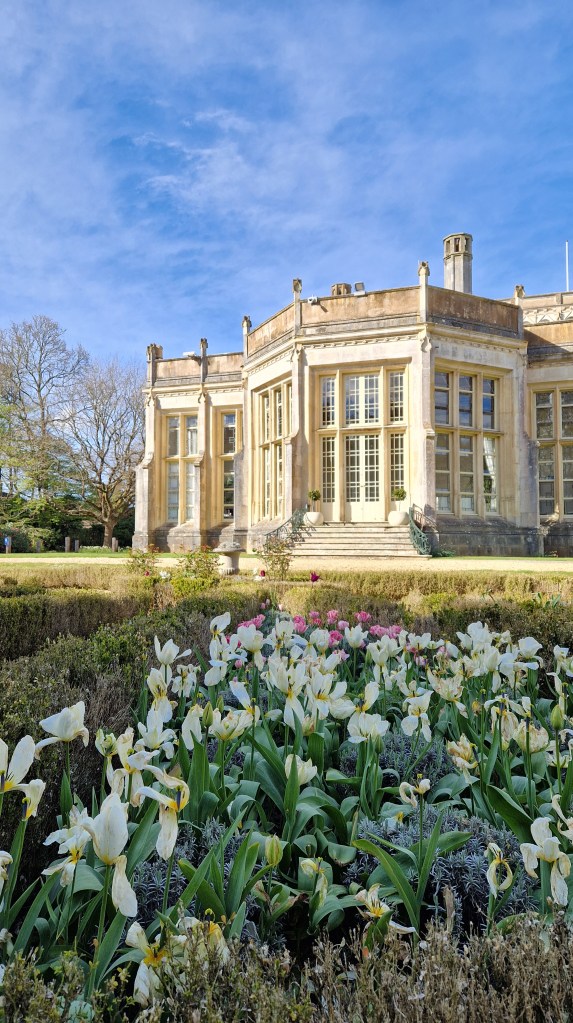
Highcliffe Castle must also be understood within the wider currents of the 19th century. This was a time when Britain, emerging from the Napoleonic Wars, was redefining its place in the world. Wealth, empire, and cultural confidence were on the rise, and architecture became one of the means through which these forces were expressed.
Simultaneously, there was a growing fascination with the medieval past. Gothic Revival architecture gained popularity, reflecting a desire to reconnect with perceived traditions and values. Yet at Highcliffe, this interest took on a uniquely tangible form: rather than merely imitating Gothic style, it incorporated genuine historical elements. This distinction elevates the castle beyond fashion. It becomes not simply an example of taste, but a document of cultural exchange between Britain and continental Europe.
And so, what are we to make of Highcliffe Castle in its 19th-century context? It is, undeniably, a product of its time: built in the 1830s at the height of Romantic architectural expression; designed by a diplomat whose career spanned the great courts of Europe; constructed using authentic medieval materials transported from France; and positioned to maximise both visual drama and symbolic presence. Yet more than this, it represents a particular kind of ambition; one that sought not merely to display wealth, but to curate history itself.
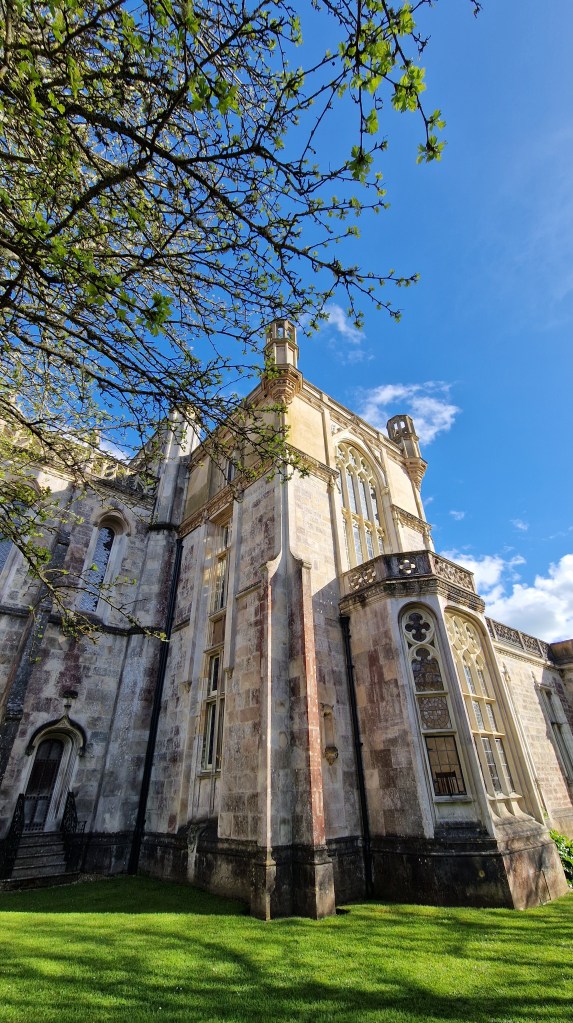
As the decades progressed, Highcliffe Castle established itself as a residence of consequence. It passed through aristocratic hands, maintaining its reputation as a place of refinement and quiet prestige.
By the early 20th century, it had become a destination for figures of international importance. Most notably, Wilhelm II spent several weeks at the castle in 1907. One can only imagine the conversations held within its walls: diplomacy, ambition, and the shifting tides of European power.
Following the upheavals of the early 20th century and changing social structures, the castle’s fortunes began to wane. By 1950, it had been sold, and its purpose shifted dramatically. No longer a private aristocratic residence, it served variously as a children’s home and later a seminary. Such transitions, while practical, rarely favour preservation. Grandeur gave way to utility, and the building’s fabric began to suffer. During the late 1960s, two major fires tore through Highcliffe Castle, leaving behind a hollowed shell. Roofs collapsed, interiors were lost, and the once-proud structure stood exposed to wind, rain, and neglect.
For years, it remained in a state of haunting ruin – a stark silhouette against the Dorset sky. Vandalism and decay threatened to erase what history had so carefully assembled. It seemed entirely possible that the castle would be lost forever, another casualty of indifference.
In 1977, the local authority intervened, recognising both the historical and architectural significance of the site. What followed was not a swift repair, but a painstaking, decades-long restoration effort. Supported by heritage funding and careful conservation work, the castle was gradually brought back from the brink. Original details were preserved where possible, lost elements thoughtfully restored, and the integrity of Lord Stuart’s vision respected throughout.
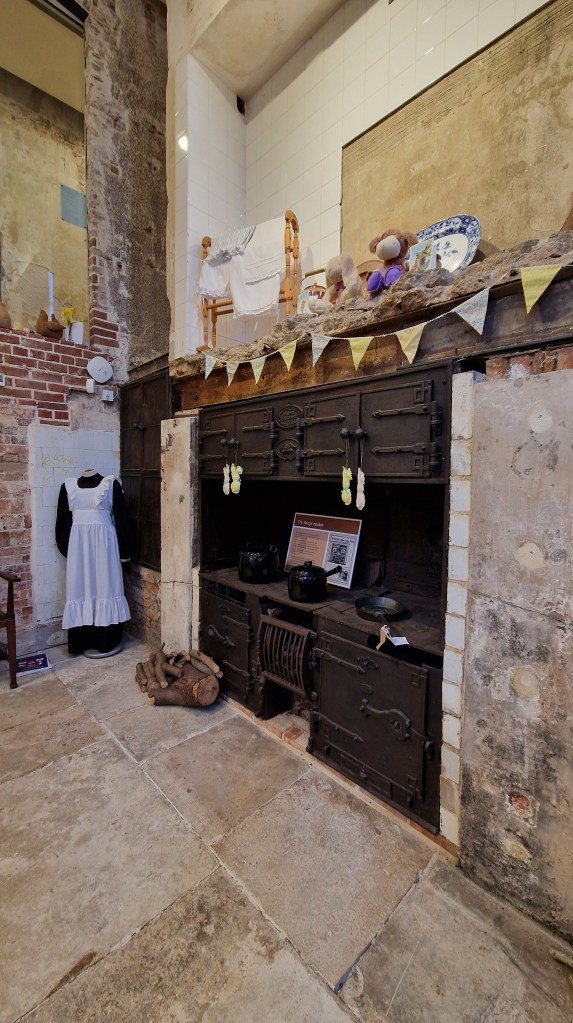
Today, Highcliffe Castle stands not as a mere reconstruction, but as a testament to resilience. It has been granted Grade I listed status, acknowledging its importance as one of the finest surviving examples of the Romantic and Picturesque architectural style in Britain. Few estates can claim such a dramatic passage through history; each era leaving its mark, each generation shaping its fate.
Standing upon those cliffs today, one does not simply observe a building. One witnesses centuries of ambition, loss, reinvention, and survival woven into stone. And if these walls could speak, one suspects they would have far more to reveal than even the keenest observer might dare to imagine.
References
- Johansen, T. P. (2017)The World Wide Web of the Society for the Diffusion of Useful Knowledge: On the Global Circulation of Broughamite Educational Literature, 1826–1848. Victorian Periodicals Review 50.4: p703–720.
 Regency Relatives
Comments, insights, and gentle corrections welcome.